
Dr. Nalini Gupta: Best Surrogacy Specialist Doctor in Delhi, India

Great staff
The ART facilities and patient care services at Dr. Nalini’s IVF clinic are of the highest caliber and reputation in India.
30 Years of Experience
Dr. Nalini Gupta has more than 30 years of experience in Surrogacy Services & Fertility Treatments, and she has earned a reputation as a center that provides excellent, ethical, and successful outcomes in the area and field of infertility treatments.
Highest Sucess
Our clinic has the best success rate for the first IVF cycle, and Dr. Nalini Gupta has a strong track record for providing the most effective IVF care in New Delhi, India.
Personal Approach
You may avoid some of the inconveniences associated with working with larger clinics, such as lengthy wait times and timetables that don’t accommodate your needs, thanks to Dr. Nalini’s personal approach.
Dr. Nalini Gupta
Leading Surrogacy specialist in Delhi, India
Dr. Nalini Gupta is a senior IVF, Surrogacy and infertility specialist in Delhi, India with qualifications in both clinical medicine and reproductive embryology.
Her documented qualifications include:
- MBBS
- MD – Obstetrics & Gynaecology
- M.Sc. – Clinical Embryology, University of Leeds, UK
- Distinction in her Master’s programme in Clinical Embryology
- Experience in assisted conception and reproductive medicine
- Registration with the Delhi Medical Council
Professional medical listings also document her previous work in reproductive medicine and infertility care, including experience at hospitals and fertility centres in Delhi.
This combination of gynaecology and embryology is particularly relevant in assisted reproduction because successful treatment involves much more than the embryo-transfer procedure itself.
Most gynaecologists who move into IVF learn embryology on the job. Dr. Gupta studied it formally, in a country where reproductive science is closely regulated and researched. That background shows up in how she explains treatment to patients she does not just tell you what to do, she tells you why.
Her career started as a Junior Resident in 1987, and since then she has worked across some of Delhi’s known hospitals and fertility centres, including Safdarjung Hospital, Army Hospital, and later, dedicated IVF and fertility centres in South Delhi. Four decades in one field is rare. Four decades where the field itself changed completely — from basic IVF to ICSI, blastocyst culture, donor programs and gestational surrogacy — is rarer still.

Awards & Certifications of Dr. Nalini Gupta


What Makes Dr. Nalini Gupta a Good Surrogacy Doctor in Delhi, India?
Dr. Nalini Gupta is a senior fertility and reproductive medicine specialist in Delhi with more than three decades of professional experience. Her qualifications include MBBS, MD in Obstetrics & Gynaecology and a Master’s in Clinical Embryology from the University of Leeds, UK, where she received distinction. Her professional profile also records experience in assisted conception and reproductive medicine at the Leeds General Infirmary and St. James’ Hospital in the UK.
Experience in Reproductive Medicine
One of the important factors when selecting a surrogacy specialist in Delhi is experience in reproductive medicine rather than experience in only one fertility procedure.
Dr. Gupta has worked in IVF, infertility management, assisted conception and related reproductive treatments for many years. Her background allows her to look at infertility from different clinical angles instead of treating surrogacy as an isolated procedure.
Her professional experience includes work as a senior infertility and IVF/ICSI specialist and director-level experience in reproductive medicine.
Training in Clinical Embryology
Another part of Dr. Gupta’s background that is relevant to assisted reproduction is her formal training in clinical embryology.
Embryology is an important part of IVF and surrogacy because embryo development and laboratory procedures are closely connected with the treatment process. Dr. Gupta completed her Master’s in Clinical Embryology at the University of Leeds, UK, and was awarded distinction.
This combination of gynaecology, infertility treatment and embryology gives her a broad understanding of assisted reproductive care.
A Personalised Approach to Fertility Treatment
Not every patient considering surrogacy has the same medical history.
Some may have undergone previous IVF cycles, while others may have a medical condition that makes carrying a pregnancy difficult or unsafe. Therefore, a careful assessment should come before deciding whether surrogacy is appropriate.
Dr. Gupta’s professional information describes an individualised approach to fertility treatment and counselling. Her work involves assessing the patient’s circumstances before selecting an appropriate treatment pathway.
Understanding the Wider Fertility Journey
A surrogacy expert in Delhi should also understand the fertility treatments that may come before surrogacy.
IVF, ICSI, embryo freezing, fertility preservation and other assisted reproductive techniques can form part of a patient’s previous or ongoing treatment history. Dr. Gupta’s professional profiles document experience across several assisted reproductive techniques, including IVF and ICSI.
This wider experience can be useful when reviewing a patient’s previous treatment and deciding what should happen next.
Medical Care Should Come Before Promises
Surrogacy is a major medical decision. A responsible specialist should explain the possible benefits, limitations and risks instead of presenting treatment as a guaranteed solution.
Dr. Gupta’s long experience in infertility and reproductive medicine provides a foundation for discussing these issues with patients. Her practice also describes counselling and patient-centred care as important parts of fertility treatment.
For patients searching for a surrogacy consultant in Delhi, this type of consultation is important because the first question should not simply be “How quickly can we start?” It should be “Is surrogacy medically appropriate for our situation, and what does the complete process involve?”
Experience Supported by a Multidisciplinary Team
Assisted reproduction is not dependent on one doctor alone. It involves embryologists, nursing staff, obstetric care, laboratory professionals and, where required, other medical specialists.
Dr. Gupta’s professional information describes collaboration with multidisciplinary teams involving embryology, andrology, surgery and obstetrics.
This is particularly relevant in complex fertility cases where different areas of reproductive medicine need to work together.
A Strong Focus on Responsible Fertility Care
For someone looking for a surrogacy doctor in India, qualifications and experience are important, but so is the doctor’s approach to treatment.
Surrogacy in India is regulated, and eligibility and procedures must be considered according to the applicable legal framework. Therefore, patients should receive proper medical guidance and should also understand that not everyone seeking surrogacy will automatically qualify.
Dr. Nalini Gupta’s experience in reproductive medicine, IVF and clinical embryology provides a strong medical background for evaluating patients who are considering assisted reproductive options.
Ultimately, what makes a doctor a good choice is not simply the title of “best surrogacy doctor.” It is the ability to combine medical knowledge, experience, careful assessment and honest communication.
For patients searching for a surrogacy specialist in Delhi, Dr. Nalini Gupta‘s decades of experience in gynaecology and reproductive medicine, UK training in clinical embryology, and long involvement with assisted conception make her an experienced specialist to consider when seeking professional guidance about surrogacy and other fertility options.
Ultrasound Scans
Ovarian Reserve Tests
Endometrial Health Assessments
Semen Analysis
DNA Fragmentation
Male & Female Reproductive Hormone Profiling
Ready to begin your journey to parenthood with Dr Nalini Gupta?
Why Does Experience Matter When Choosing a Surrogacy Doctor in Delhi?
The Surrogacy (Regulation) Act, 2021 provides the legal framework for regulating surrogacy clinics and surrogacy procedures in India. The Act also prohibits commercial surrogacy and provides for regulation of altruistic surrogacy.
The law has been supplemented by rules and subsequent amendments. Therefore, eligibility should always be checked against the current legal requirements rather than relying on older information available online. India Code records the Surrogacy Rules, 2022 and subsequent amendments and regulations.
Delhi’s official health guidance also states that surrogacy requires a prescribed medical indication and that the surrogate must meet specified eligibility requirements.
This is one reason why choosing an experienced surrogacy doctor in India is important: medical suitability and legal eligibility are separate questions, and both need to be considered.
Know About Surrogacy Centre of
Dr. Nalini Gupta
Dr. Nalini Gupta’s KIC Delfinium Fertility Centre is a leading Surrogacy clinic located in Delhi, offering a wide range of Surrogacy, IVF/ fertility treatments. Under the expert leadership of Dr. Nalini Gupta, KIC Delfinium Fertility Centre specializes in addressing various fertility challenges using advanced Assisted Reproductive Technology (ART) techniques. Our team of experienced and highly qualified fertility specialists collaborates to ensure a high success rate in fertility treatments. Additionally, our treatment costs are competitively priced, making us a cost-effective choice among fertility centre in Delhi.

Certifications of Dr. Nalini Gupta’s IVF Centre


What Patients Actually Say?


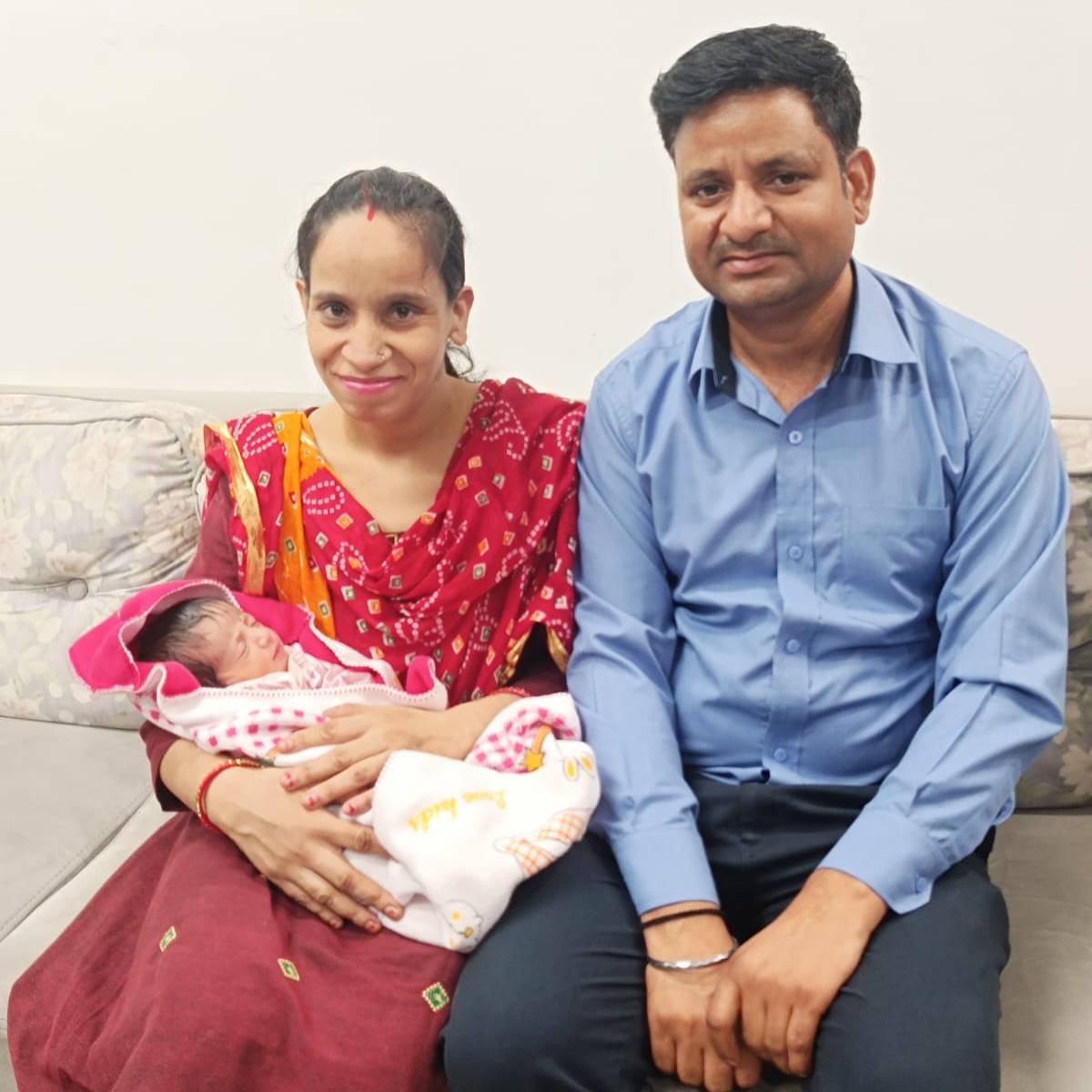
From Struggle to Joy Together Towards Parenthood



What are The Fertility Treatments
Dr. Nalini offers?
The combination of world-class facilities and Dr. Nalini’s leading expertise has helped her maintain consistently best-in-class success rates.
FAQ’s on Surrogacy
With Dr. Nalini Gupta
- Is surrogacy legal in India right now?
Yes, but only in a restricted, regulated form. Under the current law, only altruistic surrogacy is permitted — meaning the surrogate cannot be paid beyond her medical expenses and insurance. Commercial surrogacy, where a surrogate is paid a fee for the service, is not allowed anymore. This is an important point that many patients are still not fully aware of.
- Who is eligible for surrogacy under current Indian law?
Broadly, married Indian couples who have a medical condition preventing natural pregnancy, and who meet the age and documentation requirements laid out by the Surrogacy (Regulation) Act, are eligible. Single women who are widows or divorcees can also be eligible in certain cases. A consultation is the only reliable way to know your specific eligibility, since rules around eggs, sperm, and donor gametes are quite specific.
- Can the surrogate use her own eggs?
No. Under Indian law, the surrogate must be a gestational surrogate only meaning she carries the pregnancy but has no genetic connection to the child. The eggs must come from the intending mother or an approved donor, never from the surrogate herself.
- How is a surrogate mother selected and screened?
The surrogate goes through a detailed medical screening infectious disease testing, reproductive health check, and history review along with legal counselling so she fully understands her role and rights through the process. Age and prior pregnancy history are also considered before she is accepted into a surrogacy program.
- How long does the entire surrogacy process usually take?
From the initial consultation to the birth of the child, most cases take anywhere between 12 to 18 months. This includes time for surrogate matching, medical preparation, the IVF and embryo transfer process, and then the full pregnancy term. Every case is different, and delays can happen at any stage, so this is a rough range rather than a fixed number.
- What documents are required before starting surrogacy treatment?
Intended parents typically need proof of marriage, a medical certificate confirming infertility, an essentiality certificate, and other documents required under the Surrogacy (Regulation) Act. A fertility clinic experienced in surrogacy will usually guide patients through this paperwork rather than leaving them to figure it out alone.
- Is foreign national eligible for surrogacy in India?
Under the present law, surrogacy in India is largely restricted to Indian citizens. Overseas Citizens of India and foreign nationals face significant restrictions and, in most cases, are not eligible. Anyone travelling from abroad should get clear, written confirmation of their eligibility before planning treatment, rather than relying on assumptions.
Book A Free Consultation
With Dr. Nalini Gupta
New Updates
From Dr. Nalini Gupta

Cost & Packages
- IVF Cost
- Surrogacy Cost
- IUI Cost
- TESA Cost
- Hysteroscopy Treatment Cost
- Egg Freezing Cost
- AHM Test Cost
- Test Tube Baby Cost
Other Services
- Privacy Policy
- Company Policies
- Refund Policy
- Terms & Conditions
- Free Fertility Consultation
- Book Free Consultation
- E- Consultation
- Apply for Medical Visa
Quick Links
- Our Team
- Local Patient Guide
- International Patient Guide
- Schedule an Appointment
- FAQ
- Donor Options
- Second Opinion
- Sitemap
Disclaimer: Couples undergoing Surrogacy must have both gamete from the intending couple & donor gametes is not allowed & Single woman (widow/divorcee) undergoing Surrogacy must use self eggs and donor sperms to avail surrogacy procedure