
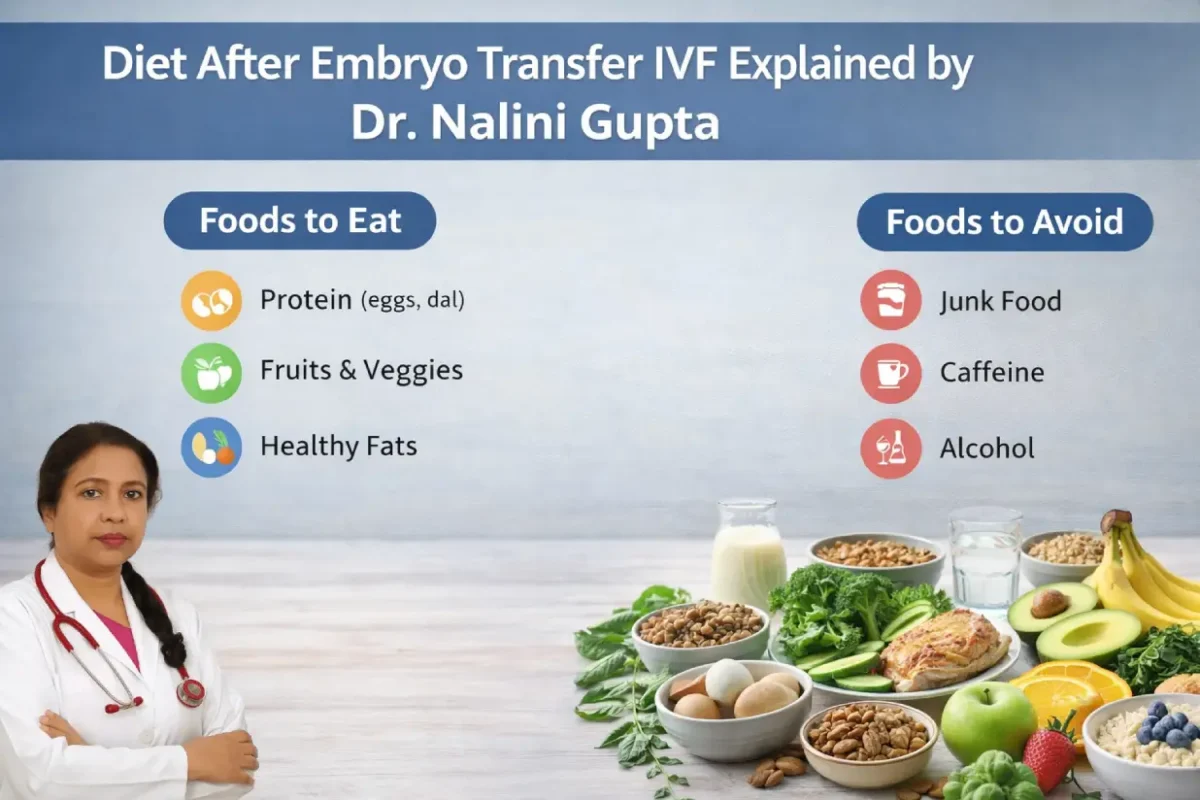

Embryo transfer is the most delicate and emotionally charged phase of the IVF journey. According to fertility expert Dr. Nalini Gupta, “What you eat after embryo transfer doesn’t guarantee success. After weeks (or months) of preparation, everything comes down to this delicate window. And naturally, one question starts to dominate your mind: “What should I eat now to increase my chances?”
Let’s be honest there’s a lot of confusing advice out there. Some say “eat pineapple,” others recommend bed rest and milk-heavy diets. But what actually works?
This guide cuts through the noise and gives you a clear, science-backed, and practical diet plan after embryo transfer IVF so you can nourish your body with confidence.
Why Diet Matters After Embryo Transfer
After embryo transfer, your body shifts into a highly sensitive phase. The goal now is to create the most supportive environment for implantation.
Nutrition plays a role in:
- Hormonal balance
- Blood flow to the uterus
- Reducing inflammation
- Supporting early cell development
Think of your body as soil and the embryo as a seed. The better the soil, the higher the chances of successful implantation.
Best Foods to Eat After Embryo Transfer IVF in 2026
Let’s break this down into simple, actionable categories.
1. Protein-Rich Foods (Essential for Cell Growth)
Protein helps repair tissues and supports embryo development.
Include:
- Eggs (well-cooked)
- Paneer and curd
- Lentils (dal)
- Chickpeas
- Lean chicken (if non-vegetarian)
- Tofu
Tip: Aim to include protein in every meal to maintain stable energy and hormone levels.
2. Warm, Easily Digestible Foods
After embryo transfer, digestion should be smooth and gentle.
Best choices:
- Khichdi
- Vegetable soups
- Oatmeal
- Steamed vegetables
- Soft rotis with light sabzi
Warm foods support circulation and are easier on the gut.
3. Foods Rich in Folic Acid
Folic acid is critical for early pregnancy and neural development.
Add to your diet:
- Spinach
- Broccoli
- Beetroot
- Oranges
- Avocado
- Fortified cereals
4. Healthy Fats for Hormonal Balance
Healthy fats support progesterone production, which is key for implantation.
Include:
- Nuts (almonds, walnuts)
- Seeds (flaxseeds, chia seeds)
- Desi ghee (in moderation)
- Olive oil
- High-Fiber Foods
IVF medications can sometimes cause constipation. Fiber helps prevent that.
Eat more of:
- Whole grains (brown rice, oats)
- Fruits like apples and pears
- Vegetables like carrots and beans
6. Hydration is Non-Negotiable
Water supports blood circulation to the uterus.
Drink:
- 8–10 glasses of water daily
- Coconut water
- Fresh fruit juices (no added sugar)
Foods to Avoid After Embryo Transfer
Now let’s talk about what not to eat—because this is just as important.
1. Processed & Junk Food
These increase inflammation and offer zero nutritional value.
Avoid:
- Chips
- Fast food
- Packaged snacks
- Sugary desserts
2. High-Mercury Fish
If you consume fish, avoid:
- Shark
- Swordfish
- King mackerel
These can affect early embryo development.
3. Caffeine (Limit It)
Too much caffeine may affect implantation.
✔ Safe limit: 1 small cup per day
❌ Avoid excess coffee, energy drinks
4. Alcohol & Smoking
Completely avoid both—they significantly reduce IVF success rates.
5. Raw or Unpasteurized Foods
Avoid:
- Raw eggs
- Unpasteurized milk
- Soft cheeses
These can carry harmful bacteria.
Quick Sample Diet Plan After Embryo Transfer
Here’s a simple day plan you can follow:
Morning (Empty Stomach):
- Warm water + soaked almonds
Breakfast:
- Vegetable oats or poha + curd
Mid-Morning Snack:
- Fruit (banana/apple) + coconut water
Lunch:
- Dal + roti + sabzi + salad
Evening Snack:
- Soup or roasted makhana
Dinner:
- Khichdi or light rice + vegetables
Before Bed:
- Haldi milk (if suitable for you)
Lifestyle Tips That Amplify Your Diet
Diet alone isn’t everything. Combine it with these habits:
- Avoid heavy lifting or strenuous exercise
- Take short walks (don’t stay completely inactive)
- Manage stress (meditation, music, deep breathing)
- Sleep 7–8 hours daily
Common Myths About IVF Diet Plan
Let’s clear a few misconceptions:
Myth 1: Pineapple guarantees implantation
Truth: No food alone can guarantee success.
Myth 2: Only bed rest is required
Truth: Light movement improves circulation.
Myth 3: Eating “for two” immediately is necessary
Truth: Focus on quality, not quantity.
Listening to Your Body
Here’s something most guides won’t tell you—your body already gives signals.
If a food causes:
- Bloating
- Discomfort
- Acidity
…avoid it, even if it’s considered “healthy.”
Every IVF journey is unique. Personalization matters more than perfection.
Conclusion
The days after embryo transfer can feel like an emotional rollercoaster. You may feel hopeful, anxious, and hyper-aware of every small decision.
But here’s the truth: you don’t need a perfect diet—you need a supportive one.
Focus on:
- Warm, nourishing foods
- Balanced nutrition
- Hydration
- Calm and consistency
Small, mindful choices create the best environment for implantation.
And sometimes, the most powerful thing you can do… is trust the process.
FAQ’s on Diet After Embryo Transfer
1. Can I drink milk after embryo transfer?
Yes, milk is safe if you tolerate it well. It provides calcium and protein. Prefer warm milk over cold.
2. Is bed rest required after embryo transfer?
No strict bed rest is needed. Light activity is actually beneficial for blood flow.
3. Can I eat bananas after IVF transfer?
Yes, bananas are excellent they provide energy, potassium, and are easy to digest.
4. Should I avoid spicy food? After ET
Moderate spice is fine, but very spicy food may cause acidity or discomfort so keep it light.
5. How soon does implantation happen after transfer?
Implantation typically occurs within 6–10 days after embryo transfer, depending on embryo stage.
