Latest Updates & Tips

From Dr. Nalini’s Blog

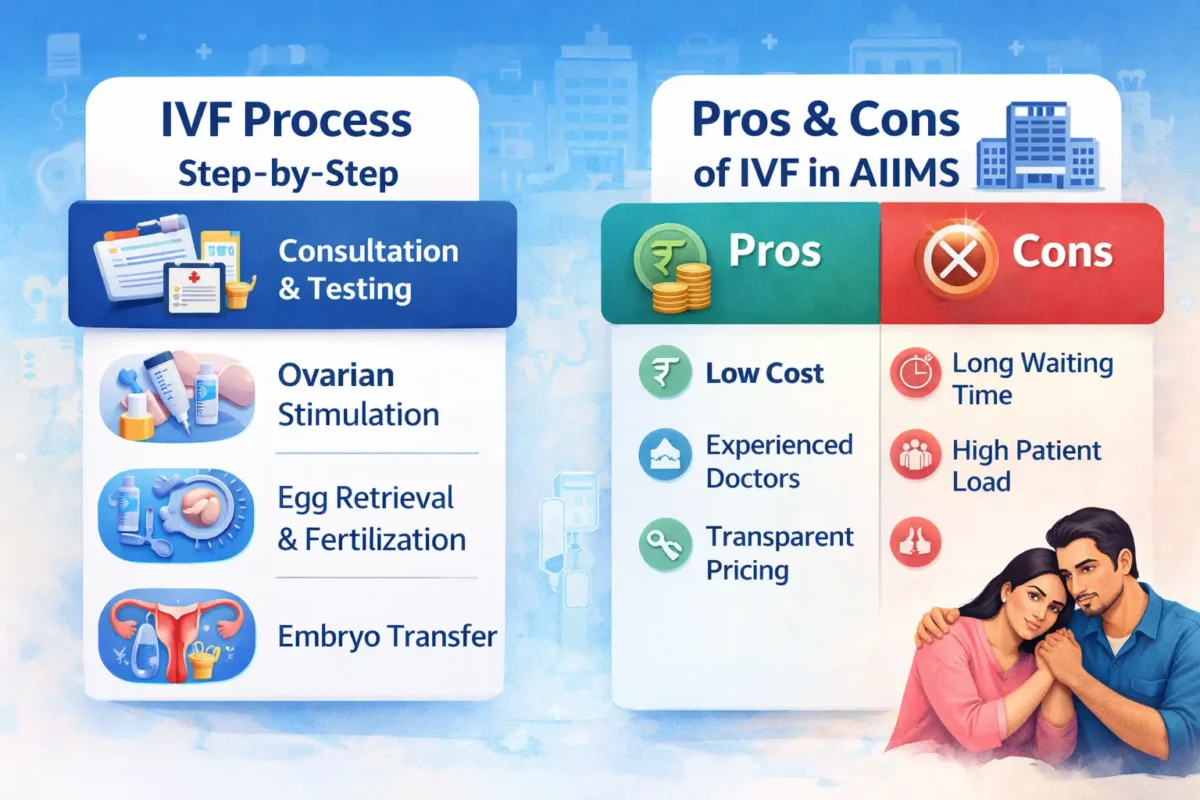
IVF-Cost-in-AIIMS-1200x800.webp
29/Mar/2026

Finding Out IVF Cost in AIIMS? Many people assume government hospitals offer IVF for free. The truth is, it is subsidized, not completely free. You still have to pay for medicines and tests.

IVF Process in AIIMS

IVF Process in AIIMS

IVF Costs in AIIMS – Complete Package Guide


S.No

IVF Procedure

Charges

1. IVF(In-Vitro-Fertilization) Costs at AIIMS Rs.60, 000/-(Sixty thousand Indian Rupees only)

2.

IVF & ICSI (In-Vitro-Fertilization with Intera-Cytoplasmic Sperm Insemination) Costs at AIIMS Rs.65,000/-(Sixty five thousand Indian Rupees only)
3. Cost of IUI at AIIMS

(Intera-Uterine Insemination)


INR Rs.4,000/-(four thousand only )per cycle with medicines and Consumables for one month
       4. Embryo Freezing Costs Rs.5, 000/-(five thousand Rupees only) for one year
       5. Cost of Frozen Embryo Replacement Rs.5000/-/-(five thousand Rupees only) per Cycle
       6. Assisted Hatching Cost Rs.2000/-/-(two thousand only Rupees) per cycle
       7. Extended Blastocyst Culture Rs.5000/-/-(five thousand only) per cycle

POV – Is IVF in AIIMS Worth It?

If I say it honestly, AIIMS is like a government college low fees, high competition, and limited seats. You save money, but you invest time and patience. If you are someone who cannot afford private IVF, then AIIMS is a strong option.

But if you want faster results and more comfort, private clinics may suit you better. It really depends on your priorities money or convenience.

IVF Cost in AIIMS vs Private IVF Clinics

Cost Comparison

Factor AIIMS Private Clinics
Cost ₹30K – ₹80K ₹1.5L – ₹3L
Waiting Time High Low
Personal Attention Limited High
Transparency High Varies

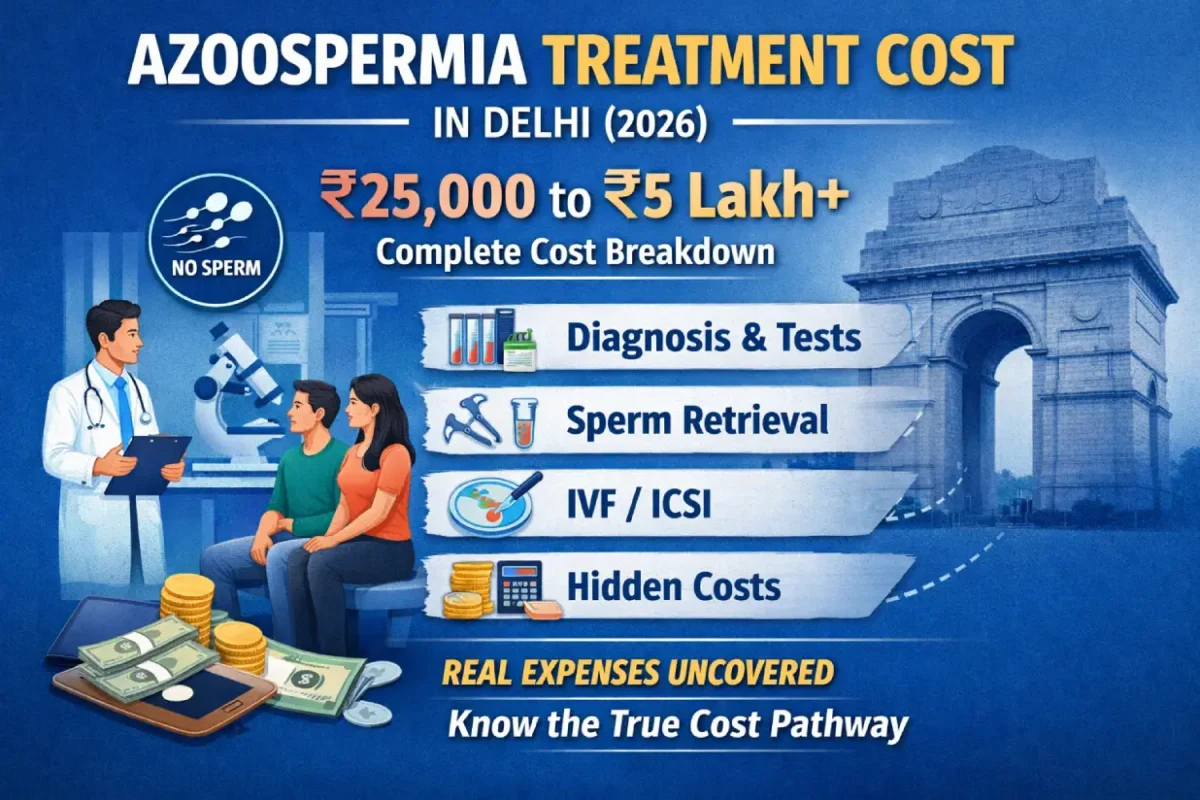
Azoospermia-treatment-cost-in-Delhi-1200x800.webp
25/Mar/2026

Azoospermia is not just a diagnosis, it is a turning point for many couples. The biggest mistake people make is assuming that “no sperm” means “no hope” or that treatment is always expensive and fixed. In reality, cost varies widely because azoospermia itself is not one single condition. This blog breaks down the real cost structure in Delhi (2026) with practical clarity not just numbers, but what actually drives those numbers.

Understanding Azoospermia Before Cost

Detailed Pricing Table – Azoospermia Treatment Cost in Delhi 2026

1. Diagnosis & Initial Workup

Component Cost Range INR (₹) What it Covers
Semen Analysis ₹600 – 1,000 Confirm azoospermia
Hormone Tests (FSH, LH, Testosterone) ₹2,000 – 5,000 Root cause detection
Ultrasound / Scrotal Scan ₹2,000 – 5,000 Structural issues
Consultation (Andrologist/Urologist) ₹2,000 – 3,000 Case evaluation
Genetic Tests (if advised) ₹10,000 – 40,000 For non-obstructive cases

Total (Diagnosis Stage): ₹8,000 – ₹50,000

2. Medical Management (Selective Cases)

Component Cost Range INR (₹) Reality Check
Hormonal Medicines ₹5,000 – 7,000 Only works in limited cases
Follow-ups (3-6 months) ₹3,000 – 10,000 Often underestimated

Total: ₹8,000 – ₹15,000


3. Sperm Retrieval Procedures

Procedure Cost Range (₹) When Used
PESA / TESA ₹25,000 – 40,000 Obstructive azoospermia
Advanced TESA (Top centres) up to ₹85,000 Complex cases
Micro-TESE Surgery ₹1,00,000 – 1,05,000 Non-obstructive cases

Total: ₹30,000 – ₹1,20,000

4. IVF / ICSI Core Treatment Cost

Treatment Type Cost Range INR (₹) Notes
Basic IVF Cycle ₹1,20,000 – 1,80,000 Base treatment
IVF + ICSI ₹1,20,000 – 2,00,000 Required in azoospermia
IVF + TESA/PESA ₹1,50,000 – 2,20,000 Combined procedure
IVF + ICSI (Advanced labs) ₹1,75,000 – 3,50,000 Depends on clinic

Core Treatment Reality:
Azoospermia almost always falls in this category.

5. Medicines & Injection Costs (Hidden but Major)

Component Cost Range INR (₹) Insight
Hormonal Injections ₹40,000 – 80,000 Biggest hidden cost
Support Medicines ₹10,000 – 20,000 Post-transfer support

Total: ₹50,000 – ₹1,00,000

6. Add-ons & Optional Procedures

Add-on Cost Range (₹) When Needed
ICSI Add-on ₹15,000 – 35,000 Male infertility
Embryo Freezing ₹20,000 – 40,000 Future cycles
Frozen Embryo Transfer (FET) ₹40,000 – 60,000 Second attempt
Genetic Testing (PGS/PGD) ₹40,000 – 1,00,000+ Selected cases
Blastocyst Culture ₹10,000 – 20,000 Better embryo selection

7. Combined Treatment Packages (2026 Cost)

Scenario Total Cost (₹)
Basic azoospermia treatment ₹25,000 – 50,000
TESA + IVF/ICSI ₹1.5 – 2.5 lakh
Micro-TESE + ICSI ₹2 – 3.5 lakh
Advanced case (with genetic testing) ₹3 – 5 lakh+
Multi-cycle treatment ₹4 – 8 lakh+

TESA + IVF packages alone can reach ₹2.6 – ₹5 lakh depending on complexity 

What Actually Drives the Azoospermia Treatment Cost in Delhi

1. Diagnosis Accuracy

Wrong diagnosis = repeated cycles = higher cost

2. Lab Quality

ICSI success depends more on the embryology lab than the hospital building

3. Doctor’s Approach

Some push IVF immediately, others try stepwise treatment

4. Number of Cycles

This is the biggest cost multiplier
One failed cycle can double your total expense

FAQ’s About Azoospermia Treatment in Delhi

1. Is azoospermia treatment always expensive? In Delhi

No. Some hormonal cases are treated under ₹50,000, but most cases involving IVF/ICSI cross ₹1.5 lakh.

2. Can azoospermia be cured naturally?

Only in limited cases (hormonal imbalance). Most cases need medical or surgical intervention.

3. Why is ICSI necessary in azoospermia?

Because sperm count is extremely low or absent in semen. ICSI allows fertilization using a single sperm.

4. Does insurance cover azoospermia treatment in Delhi?

Mostly no. Fertility treatments like ICSI are usually not covered under standard insurance plans.

5. How many cycles are usually needed?

One cycle may work, but realistically many couples need 2- 3 cycles, which increases total cost significantly.


Surrogacy-Law-in-India-1200x800.webp
23/Mar/2026

As per the Surrogacy Law in India, Surrogacy in India is no longer what it used to be 10 to15 years ago. Earlier, India was known as a global hub for the commercial surrogacy. After The Surrogacy ACT 2021, the situation is completely reversed. The law has become strict, selective, and highly controlled.

As a surrogacy expert I am trying to make you understand this topic. One thing becomes very clear: India has moved from “free market surrogacy” to “regulated moral framework.” Whether this shift is fully fair or not is still debated, but it has definitely changed how parenthood through surrogacy works.

Surrogacy Talks – Current Law of Surrogacy in India 2026

In this blog, I will break down the latest legal framework (2026), key changes, eligibility rules, real issues, and my own analysis

1. What is Surrogacy? (Simple Understanding)

Surrogacy means when a woman carries a child for another couple and gives the baby to them after birth. Under Indian law, it is clearly defined as a process where a woman gives birth to a child with the intention to hand it over to the intending parents.

There are two types globally:

  • Commercial surrogacy – where money is paid to the surrogate
  • Altruistic surrogacy – where only medical expenses are covered

In India today, only altruistic surrogacy is legal.

2. Legal Framework in India (2026)

India regulates surrogacy mainly through:

These laws completely changed the system.

Key Legal Rule:

  • Commercial surrogacy is 100% banned
  • Only altruistic surrogacy is allowed

Why was commercial surrogacy banned?

Because earlier:

  • Poor women were being exploited
  • Middlemen were making huge profits
  • Legal disputes were increasing (especially with foreign couples)

So the government decided to stop the business side completely.

3. Who Can Do Surrogacy in India? (Eligibility As Per Surrogacy Law in India 2026)

This is the most controversial part of the law.

Allowed Categories:

1. Married Indian Couples

  • Must be legally married
  • Marriage duration: usually minimum 5 years
  • Must prove infertility
  • Age:
    • Wife: approx. 23–50 years
    • Husband: approx. 26–55 years

2. Single Women (Limited Category)

  • Only:
    • Widow
    • Divorced woman
  • Age: 35–45 years


Not Allowed:

  • Live-in couples ❌
  • Unmarried couples ❌
  • Same-sex couples ❌
  • Single men ❌
  • Couples with existing children (except special cases) ❌

👉 This clearly shows that Indian law is still very traditional in defining “family.”


4. Who Can Become a Surrogate Mother As per Surrogacy Law in India? 

The law is strict here as well.

Conditions:

  • Must be an adult married woman
  • Must have at least one biological child
  • Can become surrogate only once in lifetime
  • Must give informed consent
  • Should not be paid (except medical + insurance)

Earlier, strangers could become surrogates.
Now, mostly it is expected to be a known person or relative (close relative).

5. Major Legal Requirements as per recent surrogacy law in India (Important for Exams & Understanding)

To do surrogacy legally in India, the following are needed:

1. Certificate of Infertility

  • Issued by medical authority
  • Proves that couple cannot conceive naturally

2. Certificate of Eligibility

  • Confirms couple meets all legal conditions

3. Court Order (Parentage)

  • Confirms child will legally belong to intended parents

4. Insurance for Surrogate

  • Mandatory for 36 months

6. Ban on Commercial Surrogacy – A Strong Decision

India has taken one of the strongest positions in the world.

Law says:

  • No payment except medical expenses
  • No advertising for surrogates
  • No middlemen or agents

Violation can lead to:

  • Jail up to 10 years
  • Heavy fines


My Opinion (Surrogacy Expert POV):

The intention is correct to stop exploitation.

But reality is:

  • Poor women lost an income source
  • Underground surrogacy may increase
  • Families may pressure women emotionally

So, banning commercial surrogacy solves one problem but creates another hidden problem.

7. Important Updates in Surrogacy Law in India Till 2026

Even though the main law is from 2021, some developments matter:

1. Donor Gametes Allowed (Recent Change)

  • Now allowed in specific medical cases

2. Court Interpretations Expanding Scope

Example:

  • Telangana High Court allowed surrogacy for a woman with genetic condition (CAIS)
    👉 Focus shifted to medical inability, not rigid biology

3. Supreme Court Flexibility

  • Couples who started earlier were given relief from age rules

This shows: law is strict, but courts are slowly humanising it.

8. Rights of the Child Born Through Surrogacy

  • Child is considered biological child of intended parents
  • Has full legal rights (inheritance, identity)
  • No claim by surrogate mother

This avoids confusion and legal disputes.

9. Ground Reality vs Law (Real Insight)

This is where things get interesting.

On Paper:

  • Ethical system
  • No exploitation
  • Full regulation

On Ground:

  • Hard to find surrogate (no financial benefit)
  • Family pressure cases increasing
  • Illegal arrangements may exist quietly

👉 My honest observation:
India moved from “unregulated freedom” to “over-regulation.”
Balance is still missing.

10. Ethical Issues in Indian Surrogacy Law

1. Exclusion of LGBTQ+ Community

Law does not allow same-sex couples.

This raises constitutional questions:

  • Equality (Article 14)
  • Right to life (Article 21)

2. Restriction on Single Men

No clear reason given.

Feels more moral-based than legal-based.

3. “Altruistic Only” Model Problem

  • Assumes emotional motivation
  • Ignores economic reality

In India, labour without payment is rarely realistic.

4. Family Pressure on Women

If surrogate must be a known person:

  • Sister, bhabhi, relative may be forced

Exploitation shifts from market → family.

11. Comparison: India vs Other Countries

Country Surrogacy Type Status
India Only altruistic Very strict
USA Commercial allowed (some states) Flexible
Ukraine Commercial allowed Open
UK Altruistic Regulated

India is among the most restrictive countries today.


12. Role of Government Bodies

The law created:

  • National Surrogacy Board
  • State Surrogacy Boards

Their job:

  • Register clinics
  • Monitor cases
  • Prevent illegal practices

 But implementation is still slow in many states.

13. Big Legal Debate (My Strong POV)

I personally feel:

Law is well-intentioned but incomplete.

Why?

  • It protects surrogate, but limits parents
  • It bans money, but ignores economic reality
  • It talks ethics, but ignores choice

Real solution should be:

  • Regulated compensation
  • Strong contracts
  • Strict monitoring

Not a total ban.

14. Future of Surrogacy Law in India

Looking at trends, possible changes may come:

  • Inclusion of LGBTQ+ couples
  • Clear rules for single parents
  • Controlled commercial surrogacy (maybe)
  • Better protection laws for surrogate mothers

 Courts are already pushing the system slowly towards flexibility.

15. Conclusion

Surrogacy law in India in 2026 is strict, controlled, and morally driven.

It is designed to:

  • Prevent exploitation
  • Protect women
  • Regulate fertility industry

But at the same time:

  • It excludes many people
  • It creates practical difficulties
  • It raises ethical and constitutional questions

👉 Final thought (Surrogacy Expert POV):
Law should protect people, not restrict genuine choices.
India is still searching for that balance.

FAQ’s About Surrogacy Law in India

1. Is surrogacy legal in India in 2026?

Yes, surrogacy is legal but only in altruistic form. Commercial surrogacy is completely banned in India.

2. Can unmarried couples opt for surrogacy?

No, unmarried and live-in couples are not allowed under current law.

3. Can a single person do surrogacy?

Only single women (widow/divorcee) are allowed. Single men are not permitted.

4. Is payment allowed to surrogate mothers?

No. Only medical expenses and insurance are allowed. Any extra payment is illegal.

5. Why is commercial surrogacy banned in India?

To prevent exploitation of poor women and stop unethical practices in the fertility industry.


best-ivf-centre-in-delhi-1200x800.webp
19/Mar/2026

Choosing an IVF centre in Delhi is honestly confusing. Every clinic claims a “high success rate”, but very few explain how they actually achieve it. After studying multiple clinics, one thing is clear lab quality, doctor involvement, and case selection matter more than branding.

Below is a serious, ground-level analysis as per the patients talks reviews of 10 Best IVF centres of Delhi (no aggregators)

1. KIC Delfinium Fertility & IVF Centre

KIC Delfinium Owned by Dr. Nalini is not as widely marketed as some larger chains, but that itself creates a different kind of environment. Smaller setups like this often allow closer doctor-patient interaction. In IVF, that matters more than brand size. However, such centres depend heavily on individual doctor expertise rather than systems.

Services Offered

  • IVF, ICSI, IUI
  • Advanced embryo culture
  • Genetic testing (PGT)
  • Egg freezing & fertility preservation
  • Repeated IVF failure cases

Contact Details

📍Address: F21, South Extention Part 1, Delhi –  110049
📞 Phone: +91 95997 54411
🌐 Website: delfiniumfertility.com
📧 Email: info@delfiniumfertility.com

Key Strength

  • Strong embryology lab focus
  • Advanced genetic screening approach
  • Case-based treatment (not one-plan-for-all)

Success Rate

  • ~65–75% (depends on age & case complexity)

Cost Insight

  • ₹1.8L – ₹3L per IVF cycle
  • Genetic testing adds extra cost

Pros

✔ Scientific approach
✔ Good for repeated IVF failures
✔ Less rush, more attention

Cons

✘ Slightly expensive
✘ Not many branches

2. ART Fertility Clinics

This clinic represents a structured, technology-driven model of IVF care. It focuses on advanced lab systems and standardized protocols. Reports suggest pregnancy rates around 70% in some cases, which is higher than average.

But here’s the reality—high-tech labs help, but they don’t guarantee outcomes. IVF success still depends on age, egg quality, and diagnosis.

Services

  • IVF, ICSI, IMSI
  • AI-supported embryo selection
  • Male infertility treatment
  • Fertility preservation

Contact Details

📍 Defence Colony, Delhi
📞 +91 9266398863
📧 namaste@artfertilityclinics.in
🌐 artfertilityclinics.in

Success Rate

  • Around 70% pregnancy rate claimed

Cost

  • ₹1.2L – ₹2.5L

Pros

✔ Advanced lab tech
✔ International protocols
✔ Transparent systems

Cons

✘ Slightly system-driven (less personal touch)

3. ARTbaby IVF Centre

ARTbaby positions itself around ethical and personalised treatment. It offers a wide range of services including fertility preservation and surrogacy under legal guidelines.

The strength here is patient-focused care. The limitation? Like many mid-sized centres, outcomes can vary depending on case complexity.

Services

  • IVF & IUI
  • Egg donation programs
  • Surrogacy support (as per law)
  • Male infertility treatment

Contact Details

📍 Sector 17 Dwarka, Delhi
📞 +91 9810432227
📧 info@artbaby.in
🌐 artbaby.in

Success Rate

  • ~60–70% (case dependent)

Cost

  • ₹1L – ₹2L

Pros

✔ Government registered
✔ Ethical approach
✔ Good for first-time IVF

Cons

✘ Smaller setup
✘ Limited high-end tech

4. Nova IVF Fertility

Nova is one of the more established IVF chains in India. It follows a corporate model with standard protocols and trained teams across cities. It is often known for consistent processes and relatively stable outcomes.

However, large chains sometimes feel less personal. Patients should ensure they know which doctor is actually handling their case, not just the brand.

Services

  • IVF, ICSI, IUI
  • Embryoscope technology
  • Egg & embryo freezing

Contact Details

📍 Multiple centres in Delhi NCR
📞 080 49388781
🌐 novaivffertility.com

Success Rate

  • ~60–70%

Cost

  • ₹1.5L – ₹2.5L

Pros

✔ Standardized treatment
✔ Strong lab SOPs

Cons

✘ Feels corporate
✘ Less flexibility

5. Indira IVF

Indira IVF has one of the largest networks in India. Its scale makes IVF more accessible, especially for middle-income families. Reported success rates are around 60–70% depending on cases.

But scale comes with trade-offs. Some patients report feeling like part of a system rather than an individual case. It works well for straightforward cases, but complex cases may need deeper attention.

Services

  • IVF, IUI
  • Low-cost IVF packages
  • Basic infertility treatment

Contact Details

📍 Multiple branches in delhi
📞 1800 309 2323
🌐 indiraivf.com

Success Rate

  • ~55–65%

Cost

  • ₹90K – ₹1.8L

Pros

✔ Budget-friendly
✔ Wide network

Cons

✘ High patient load
✘ Less doctor time

6. Gaudium IVF Centre

Gaudium has built a strong reputation in Delhi over the years, especially for handling repeated IVF failures. It has expanded across multiple cities and focuses on customised treatment plans.

One thing noticeable here is their emphasis on difficult cases. That usually indicates clinical confidence but patients should still verify treatment approaches, not just success stories.

Services

  • IVF, ICSI, IUI
  • PCOS & endometriosis treatment
  • Laser hatching
  • Cryopreservation

Contact Details

📍 Janakpuri, Delhi
📞 +91 8527592000
🌐 gaudiumivfcentre.com

Success Rate

  • ~65–75%

Cost

  • ₹1.5L – ₹2.2L

Pros

✔ Good for PCOS patients
✔ Experienced team

Cons

✘ Slightly premium

7. Crysta IVF

Crysta IVF is often discussed for its structured and transparent approach. It positions itself as ethical and patient-friendly, with clear communication around treatment plans.

In IVF, transparency is underrated. Many clinics overpromise. Centres like Crysta that focus on realistic expectations may actually reduce emotional damage.

Services

  • IVF & ICSI
  • Fertility counselling
  • Egg freezing
  • Male infertility

Contact Details

📍 Multiple locations
📞 +91 9599004311
🌐 crystaivf.com

Success Rate

  • ~60–70%

Cost

  • ₹1.2L – ₹2L

Pros

✔ Good counselling
✔ Clear pricing

Cons

✘ Marketing-heavy presence

8. Origyn IVF

Origyn IVF is known for experienced leadership and multiple centres in Delhi. While public data is limited, discussions often highlight doctor experience as a key strength.

This is important because in IVF, lab quality and doctor judgement together decide outcomes.

Services

  • IVF, IUI
  • High-risk pregnancy support
  • Hormonal treatment

Contact Details

📍 Delhi NCR
📞 +91 8080809084
🌐 origynivf.com

Insight

Known for experienced doctors (20+ years).

Success Rate

  • ~65–70%

Cost

  • ₹1.3L – ₹2.2L

Pros

✔ Experienced leadership
✔ Stable results

Cons

✘ Older infrastructure in some centres

9. RISAA IVF

This clinic was founded by sarthak bakshi son of dr. rita bakshi, RISAA IVF has been around for more than a decade and is associated with experienced fertility specialists. It focuses on personalised treatment and modern lab facilities, including advanced reproductive techniques.

One clear observation centres with long-standing doctors often perform better in complex fertility histories.

Services

  • IVF, ICSI
  • Donor programs
  • Male infertility

Contact Details

📍 Green Park, Delhi
📞 +91 9555544421
🌐 risaaivf.com

Insight

Strong academic background and training-based system.

Success Rate

  • ~60–70%

Cost

  • ₹1.2L – ₹2L

Pros

✔ Good lab setup
✔ Doctor-led care

Cons

✘ Slightly crowded

10. Dreamz IVF

Dreamz IVF is a smaller, doctor-driven centre. It offers individual attention and a wide range of fertility services like IVF, ICSI, and surrogacy.

Such clinics can be very effective for patients who prefer continuity with one doctor rather than multiple consultants.successfully run by 10+ years

Services

  • IVF, ICSI
  • Advanced embryo transfer
  • Fertility counselling

Contact Details

📍 C-573, First floor, C-BLOCK, Bus stop, Outer Ring Rd, behind Saraswati Vihar, Block C, Saraswati Vihar, Pitampura, Delhi, 110034i
📞 +91 90130 06060 

Insight

Focused IVF centre with strong success claims.

Success Rate

  • 70–80% reported

Cost

  • ₹1.5L – ₹2L

Pros

✔ High success track record
✔ Focused IVF care

Cons

✘ Limited transparency on complex cases


Top IVF Centres in Delhi with their Ratings in 2026

IVF Centre Location (Delhi) Google Rating ⭐ Review Insight
Delfinium Fertility & IVF Centre Vasant Vihar ⭐ 4.6 – 4.8 (est.) Niche clinic, limited but strong reviews
ART Fertility Clinics Defence Colony ⭐ 4.6 – 4.8 (est.) Premium clinic, high satisfaction for lab quality
ARTbaby IVF Centre Dwarka ⭐ 4.3 – 4.5 (est.) Smaller clinic, stable feedback
Nova IVF Fertility Lajpat Nagar & NCR ⭐ 4.5 / 5 Consistent reviews across centres
Indira IVF Multiple Delhi centres ⭐ 4.4 – 4.6 / 5 High volume, mixed but mostly positive
Gaudium IVF Centre Janakpuri / Kailash Colony ⭐ 4.6 – 4.7 / 5 Strong reputation, high patient satisfaction
Crysta IVF Delhi NCR ⭐ 4.5 – 4.7 (est.) Good transparency, modern setup
Origyn IVF Vikaspuri / NCR ⭐ 4.4 / 5 Stable but slightly lower than premium clinics
RISAA IVF Green Park ⭐ 4.4 – 4.6 (est.) Doctor-led, decent feedback
Dreamz IVF Pitampura ⭐ 4.3 – 4.5 (est.) Word-of-mouth driven clinic

IVF Success Rate Comparison Table (Delhi – Realistic View)

IVF Centre Claimed Success Rate Realistic Range (Per Cycle) Best For
Delfinium Fertility ~75 – 80% (est.) 75–80% Repeat IVF failure, advanced cases
ART Fertility Clinics 70–75% 50–70% Lab-focused, high-end IVF
ARTbaby IVF Centre ~60–70% 50–65% Budget + legal compliance
Nova IVF Fertility ~60–72% 50–65% Standardised IVF care
Indira IVF ~70–80% claimed 55–65% Affordable, high-volume
Gaudium IVF Centre ~70–85% claimed 60–70% Complex & PCOS cases
Crysta IVF ~60–70% 55–65% Transparent & balanced
Origyn IVF ~70–80% 60–70% Experienced doctors
RISAA IVF ~60–70% 50–65% Doctor-led treatment
Dreamz IVF ~70–80% claimed 55–70% Focused IVF centre


IVF Cost in Delhi by Top IVF Centers in Delhi (2026)

Clinic Name Basic IVF Cycle Cost (₹) With ICSI (₹) Medicines Cost (₹) Total Estimated Cost (₹) Cost Transparency Notes (Ground Reality)
Delfinium Fertility & IVF Centre 1.40 – 1.80 lakh 1.80 – 2.20 lakh 60k – 1 lakh 2.2 – 3.0 lakh Medium Smaller setup, cost may vary case to case
ART Fertility Clinics 2.20 – 2.80 lakh 2.80 – 3.50 lakh 80k – 1.2 lakh 3.2 – 4.5 lakh High Premium lab + structured protocols
ARTbaby IVF Centre 1.50 – 2.00 lakh 2.00 – 2.50 lakh 70k – 1 lakh 2.3 – 3.2 lakh Medium Personalized care, moderate pricing
Nova IVF Fertility 1.80 – 2.40 lakh 2.40 – 3.00 lakh 80k – 1.2 lakh 2.8 – 4.0 lakh High Corporate model, standardised pricing
Indira IVF 1.20 – 1.80 lakh 1.80 – 2.40 lakh 60k – 1 lakh 2.0 – 3.2 lakh High More accessible pricing, high volume
Gaudium IVF Centre 1.80 – 2.50 lakh 2.50 – 3.20 lakh 80k – 1.2 lakh 3.0 – 4.2 lakh Medium Often handles complex cases
Crysta IVF 1.60 – 2.20 lakh 2.20 – 2.80 lakh 70k – 1 lakh 2.5 – 3.5 lakh High Known for clearer communication
Origyn IVF 1.50 – 2.10 lakh 2.10 – 2.70 lakh 70k – 1 lakh 2.4 – 3.4 lakh Medium Doctor-driven outcomes
RISAA IVF 1.70 – 2.30 lakh 2.30 – 3.00 lakh 80k – 1.2 lakh 2.8 – 4.0 lakh Medium Strong in advanced treatments
Dreamz IVF 1.30 – 1.90 lakh 1.90 – 2.40 lakh 60k – 90k 2.1 – 3.0 lakh Medium Smaller centre, doctor-focused

Let’s be clear, IVF Cost in Delhi is not fixed like a product. These numbers are realistic averages, but your final bill depends on:

1. Your Medical Condition

  • Low AMH can takes up higher medicine cost
  • Male infertility if ICSI required
  • Repeated failure can extra procedures

2. Hidden Add-ons (Most Clinics Don’t Mention Early)

  • Blastocyst culture: ₹20k–₹40k
  • Embryo freezing: ₹30k–₹60k
  • FET (Frozen Transfer): ₹40k–₹80k
    PGT testing: ₹80k–₹2 lakh

5 Practical FAQs (Real Doubts People Have)

1. What is a good IVF success rate?

60–70% per cycle is realistic. Anything above 80% is usually selective or marketing.

2. Is ART registration important?

Yes. It ensures the clinic follows legal and ethical rules under the 2021 Act.

3. How many IVF cycles are usually needed?

Most couples need 1–3 cycles, depending on age and health.

4. What affects IVF success most?

  • Woman’s age
  • Egg quality
  • Lab quality (very important)

5. How to choose the right IVF centre?

Go beyond Google reviews:

  • Check lab
  • Ask success rate by age
  • Meet doctor personally

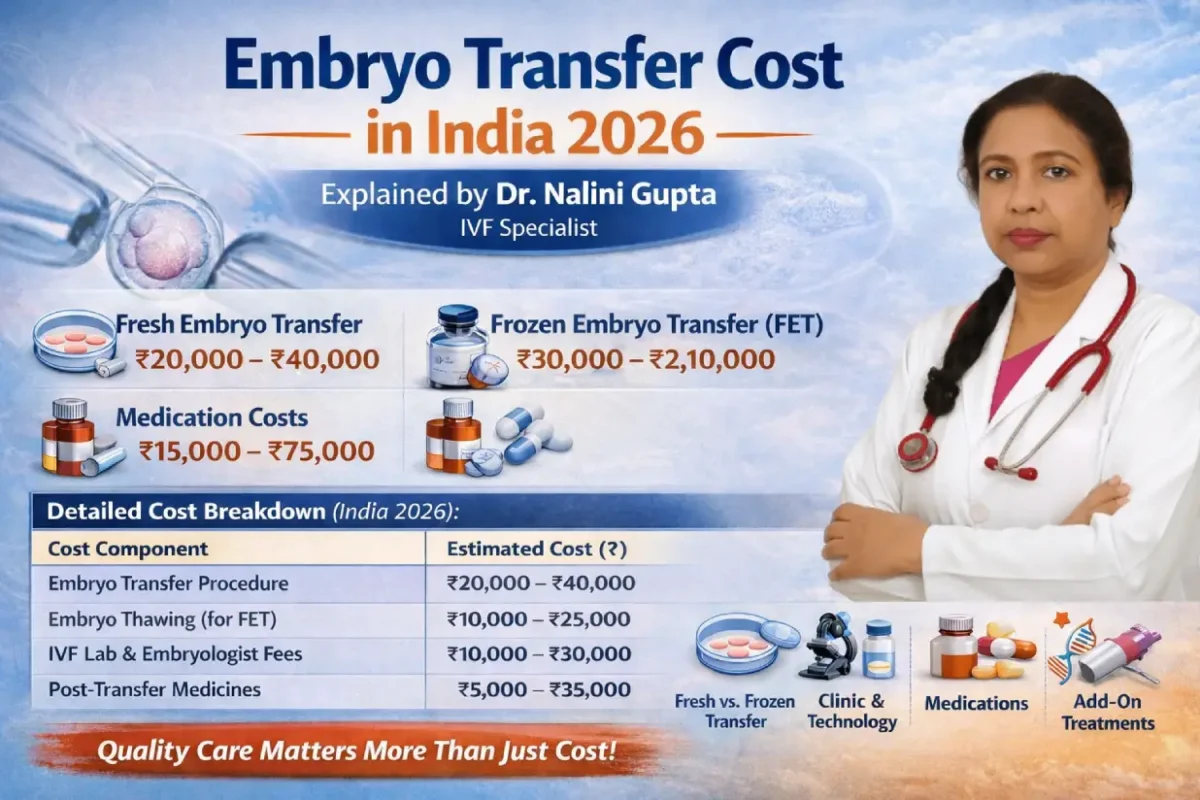
Embryo-Transfer-Cost-in-India-1200x800.webp
18/Mar/2026

Embryo transfer is one of the shortest steps in IVF, but it is one of the most misunderstood when families discuss money. Many people are told one number for the “transfer”, and later they see separate charges for medicines, scans, freezing, thawing, storage, and blood tests. That is where confusion starts.

The clinical truth is simple: the embryo transfer cost is not just the cost of putting the embryo inside the uterus. The real expense is in the preparation before transfer and the support after it.

Embryo transfer cost in India (Detailed 2026)

  • Embryo transfer cost in India for a fresh transfer can be around ₹25,000 to ₹50,000 if billed separately.
  • In many IVF centres, fresh embryo transfer is already included in the IVF package, so patients may not see a separate line item.
  • Frozen Embryo transfer cost in India usually ranges from ₹45,000 to ₹95,000.
  • If freezing charges and yearly storage are added, the total can go up to ₹1,10,000 or more.

These are practical 2026 estimate ranges for standard private fertility centres in India. Premium hospitals, complex cases, donor cycles, and optional add-ons can increase the bill.

What is embryo transfer?

Embryo transfer is the step where the embryo is placed inside the uterus using a thin catheter. It is usually a short and painless procedure. It may be done in two ways:

1. Fresh embryo transfer

The embryo is transferred in the same IVF cycle, a few days after egg retrieval.

2. Frozen embryo transfer (FET)

The embryo is frozen first and transferred in a later cycle after preparing the uterine lining properly.

A very important point: the Frozen Embryo transfer cost is not the same as embryo freezing cost. These are different charges, and many families mix them up.


Embryo transfer cost components in India 2026

The best way to understand cost is to break it into parts.

Embryo transfer component Fresh embryo transfer cost Frozen embryo transfer cost What it means
Consultation and cycle planning ₹1,000 – ₹3,000 ₹1,000 – ₹3,000 Review of reports, timing, treatment plan
Medicines for uterine lining preparation Often included or minimal ₹5,000 – ₹20,000 Tablets, injections, hormonal support
Ultrasound scans and blood tests ₹3,000 – ₹8,000 ₹5,000 – ₹15,000 Monitoring lining and ovulation/hormones
Embryo transfer procedure fee ₹15,000 – ₹30,000 ₹15,000 – ₹35,000 Main procedure charge
Procedure room / consumables / catheter ₹2,000 – ₹5,000 ₹2,000 – ₹6,000 Catheter, sterile items, support materials
Embryology lab handling Usually part of IVF cycle ₹10,000 – ₹25,000 Thawing and preparing frozen embryo
Luteal support medicines after transfer ₹3,000 – ₹10,000 ₹3,000 – ₹12,000 Progesterone and related medicines
Pregnancy test and early follow-up ₹1,500 – ₹4,000 ₹1,500 – ₹4,000 Beta hCG and first review
Embryo freezing charge Usually part of IVF cycle ₹10,000 – ₹25,000 if charged separately Paid earlier when embryos are frozen
Embryo storage fee Not usually relevant ₹5,000 – ₹15,000 per year Yearly storage in cryobank

Estimated total

  • Embryo transfer cost (fresh, if billed separately): ₹25,000 – ₹50,000
  • Frozen Embryo transfer cost: ₹45,000 – ₹95,000
  • Frozen Embryo transfer cost in India with storage or old freezing charges added: ₹50,000 – ₹1,10,000+

Embryo transfer cost in top cities of India for 2026

City matters. Rent, lab cost, hospital overhead, and specialist fees change the final number. But city alone does not decide quality.

City Embryo transfer cost (fresh, if billed separately) Frozen Embryo transfer cost in India
Delhi NCR ₹30,000 – ₹55,000 ₹50,000 – ₹95,000
Mumbai ₹35,000 – ₹60,000 ₹55,000 – ₹1,00,000
Bengaluru ₹30,000 – ₹55,000 ₹50,000 – ₹90,000
Chennai ₹28,000 – ₹50,000 ₹45,000 – ₹85,000
Hyderabad ₹28,000 – ₹50,000 ₹45,000 – ₹85,000
Pune ₹28,000 – ₹48,000 ₹45,000 – ₹80,000
Ahmedabad ₹25,000 – ₹45,000 ₹40,000 – ₹75,000
Kolkata ₹25,000 – ₹45,000 ₹42,000 – ₹78,000

Important note: These are broad 2026 private-centre estimates. Government hospitals and teaching institutions may charge less, but access, waiting period, and case selection can differ.

Why Frozen Embryo transfer cost is often misunderstood

This is where most billing confusion happens.

A patient may ask for Frozen Embryo transfer cost in India, but the final bill may include three separate things:

  1. Old embryo freezing charge from the previous IVF cycle
  2. Yearly storage charge for keeping embryos frozen
  3. Current FET cycle charge for medicines, scans, thawing, and transfer

These three are not the same. When centres combine them without clear explanation, the family feels the transfer itself is expensive. In reality, part of that amount may belong to a previous cycle.

Strong clinical view:
A transparent fertility centre should clearly separate:

  • transfer procedure cost,
  • thawing/lab cost,
  • medicine cost,
  • storage cost,
  • optional add-ons.

If this breakdown is not given, the quote is incomplete.

What increases embryo transfer cost?

1. Fresh vs frozen transfer

A fresh transfer is usually cheaper only if it is already included in the IVF cycle.
A frozen transfer often has extra cost because of:

  • uterine lining preparation,
  • thawing,
  • extra scans,
  • storage charges.

2. Natural cycle FET vs medicated FET

Some women go through a natural cycle FET, where the body ovulates naturally. This may reduce medicine cost but needs close monitoring.
A medicated FET may use more hormonal support and can increase cost.

3. Embryo stage

Blastocyst embryos, day-3 embryos, assisted hatching, and special lab handling may change cost.

4. City and centre type

Metro city hospitals usually charge more. But a higher fee does not automatically mean better pregnancy rates.

5. Add-ons

Some centres add:

  • embryo glue,
  • assisted hatching,
  • extra monitoring,
  • advanced blood tests.

These are not needed for every patient. They should not be pushed as routine.

6. Cancellation and rescheduling

If the uterine lining is not ready, progesterone rises too early, or the body is not responding well, the transfer may be postponed. That means more scans, more medicines, and sometimes more cost.

A doctor’s view: the cheapest quote is often not the cheapest treatment

This is an important point.

Many families search only for the lowest Embryo transfer cost. But in fertility care, a low quote can hide missing items. A ₹35,000 quote may become ₹70,000 after adding scans, medicines, thawing, catheter, and follow-up.

A better question is:

“What exactly is included in this embryo transfer cost in India?”

That one question prevents most billing surprises.

Ask for these details in writing:

  • Is the transfer included in the IVF package or separate?
  • Are medicines included?
  • How many scans are included?
  • Is embryo thawing included in the FET cost?
  • Is storage charged separately?
  • Are add-ons optional or routine?
  • If the cycle is cancelled, what amount is refundable?

This is not bargaining. This is informed medical consent.

Does a higher embryo transfer cost mean higher success?

No.

Success depends more on:

  • woman’s age,
  • embryo quality,
  • uterine lining quality,
  • embryo genetics,
  • lab standards,
  • proper timing,
  • transfer technique,
  • hormone support after transfer.

The transfer procedure itself may take only a few minutes. The biology behind that procedure matters far more than the length of the procedure.

That is why a very expensive transfer with poor embryo quality may fail, while a simpler cycle with a good embryo and well-prepared uterus may succeed.

Practical cost summary for 2026

Fresh embryo transfer

  • Usually part of IVF package
  • If billed separately: ₹25,000 – ₹50,000

Frozen embryo transfer

  • Standard FET cycle: ₹45,000 – ₹95,000
  • If freezing and storage are also added: ₹50,000 – ₹1,10,000+

Most common mistake

Families confuse:

  • embryo transfer fee,
  • embryo freezing fee,
  • embryo storage fee.

These should always be shown separately.

FAQs on Embryo Transfer Cost in India

1. Is embryo transfer cost separate from IVF cost?

Often, fresh embryo transfer is included in the IVF package. But some centres bill parts separately, especially medicines, scans, catheter, and blood tests. Always ask for item-wise costing.

2. What is the Frozen Embryo transfer cost in India in 2026?

A standard Frozen Embryo transfer cost in India is usually around ₹45,000 to ₹95,000. If yearly storage or previous freezing charges are added, the total can go higher.

3. Why is Frozen Embryo transfer cost sometimes higher than fresh embryo transfer?

Because FET may include:

  • uterine lining preparation,
  • repeat scans,
  • embryo thawing,
  • extra lab work,
  • storage-related charges.

The transfer itself is short, but the preparation is what changes the bill.

4. Are add-ons like embryo glue always necessary?

No. Add-ons are not necessary for every patient. They should be advised only when there is a clear medical reason. Routine use without explanation is not good practice.

5. How can a patient avoid hidden charges in embryo transfer?

Ask for a written estimate with:

  • medicines,
  • scans,
  • lab charges,
  • thawing,
  • storage,
  • procedure fee,
  • pregnancy test,
  • refund or cancellation policy.

A clear bill is a sign of ethical care.


Diet-After-Embryo-Transfer-IVF-1200x800.webp
18/Mar/2026

Embryo transfer is the most delicate and emotionally charged phase of the IVF journey. According to fertility expert Dr. Nalini Gupta, “What you eat after embryo transfer doesn’t guarantee success. After weeks (or months) of preparation, everything comes down to this delicate window. And naturally, one question starts to dominate your mind: What should I eat now to increase my chances?

Let’s be honest there’s a lot of confusing advice out there. Some say “eat pineapple,” others recommend bed rest and milk-heavy diets. But what actually works?

This guide cuts through the noise and gives you a clear, science-backed, and practical diet plan after embryo transfer IVF so you can nourish your body with confidence.

Why Diet Matters After Embryo Transfer

After embryo transfer, your body shifts into a highly sensitive phase. The goal now is to create the most supportive environment for implantation.

Nutrition plays a role in:

  • Hormonal balance
  • Blood flow to the uterus
  • Reducing inflammation
  • Supporting early cell development

Think of your body as soil and the embryo as a seed. The better the soil, the higher the chances of successful implantation.

Best Foods to Eat After Embryo Transfer IVF in 2026 

Let’s break this down into simple, actionable categories.

1. Protein-Rich Foods (Essential for Cell Growth)

Protein helps repair tissues and supports embryo development.

Include:

  • Eggs (well-cooked)
  • Paneer and curd
  • Lentils (dal)
  • Chickpeas
  • Lean chicken (if non-vegetarian)
  • Tofu

Tip: Aim to include protein in every meal to maintain stable energy and hormone levels.

2. Warm, Easily Digestible Foods

After embryo transfer, digestion should be smooth and gentle.

Best choices:

  • Khichdi
  • Vegetable soups
  • Oatmeal
  • Steamed vegetables
  • Soft rotis with light sabzi

Warm foods support circulation and are easier on the gut.

3. Foods Rich in Folic Acid

Folic acid is critical for early pregnancy and neural development.

Add to your diet:

  • Spinach
  • Broccoli
  • Beetroot
  • Oranges
  • Avocado
  • Fortified cereals

4. Healthy Fats for Hormonal Balance

Healthy fats support progesterone production, which is key for implantation.

Include:

  • Nuts (almonds, walnuts)
  • Seeds (flaxseeds, chia seeds)
  • Desi ghee (in moderation)
  • Olive oil
  1. High-Fiber Foods

IVF medications can sometimes cause constipation. Fiber helps prevent that.

Eat more of:

  • Whole grains (brown rice, oats)
  • Fruits like apples and pears
  • Vegetables like carrots and beans

6. Hydration is Non-Negotiable

Water supports blood circulation to the uterus.

Drink:

  • 8–10 glasses of water daily
  • Coconut water
  • Fresh fruit juices (no added sugar)

Foods to Avoid After Embryo Transfer

Now let’s talk about what not to eat—because this is just as important.

1. Processed & Junk Food

These increase inflammation and offer zero nutritional value.

Avoid:

  • Chips
  • Fast food
  • Packaged snacks
  • Sugary desserts

2. High-Mercury Fish

If you consume fish, avoid:

  • Shark
  • Swordfish
  • King mackerel

These can affect early embryo development.

3. Caffeine (Limit It)

Too much caffeine may affect implantation.

✔ Safe limit: 1 small cup per day
❌ Avoid excess coffee, energy drinks

4. Alcohol & Smoking

Completely avoid both—they significantly reduce IVF success rates.

5. Raw or Unpasteurized Foods

Avoid:

  • Raw eggs
  • Unpasteurized milk
  • Soft cheeses

These can carry harmful bacteria.

Quick Sample Diet Plan After Embryo Transfer

Here’s a simple day plan you can follow:

Morning (Empty Stomach):

  • Warm water + soaked almonds

Breakfast:

  • Vegetable oats or poha + curd

Mid-Morning Snack:

  • Fruit (banana/apple) + coconut water

Lunch:

  • Dal + roti + sabzi + salad

Evening Snack:

  • Soup or roasted makhana

Dinner:

  • Khichdi or light rice + vegetables

Before Bed:

  • Haldi milk (if suitable for you)

Lifestyle Tips That Amplify Your Diet

Diet alone isn’t everything. Combine it with these habits:

  • Avoid heavy lifting or strenuous exercise
  • Take short walks (don’t stay completely inactive)
  • Manage stress (meditation, music, deep breathing)
  • Sleep 7–8 hours daily

Common Myths About IVF Diet Plan

Let’s clear a few misconceptions:

Myth 1: Pineapple guarantees implantation
Truth: No food alone can guarantee success.

Myth 2: Only bed rest is required
Truth: Light movement improves circulation.

Myth 3: Eating “for two” immediately is necessary
Truth: Focus on quality, not quantity.

Listening to Your Body

Here’s something most guides won’t tell you—your body already gives signals.

If a food causes:

  • Bloating
  • Discomfort
  • Acidity

…avoid it, even if it’s considered “healthy.”

Every IVF journey is unique. Personalization matters more than perfection.

Conclusion

The days after embryo transfer can feel like an emotional rollercoaster. You may feel hopeful, anxious, and hyper-aware of every small decision.

But here’s the truth: you don’t need a perfect diet—you need a supportive one.

Focus on:

  • Warm, nourishing foods
  • Balanced nutrition
  • Hydration
  • Calm and consistency

Small, mindful choices create the best environment for implantation.

And sometimes, the most powerful thing you can do… is trust the process.

FAQ’s on Diet After Embryo Transfer

1. Can I drink milk after embryo transfer?

Yes, milk is safe if you tolerate it well. It provides calcium and protein. Prefer warm milk over cold.

2. Is bed rest required after embryo transfer?

No strict bed rest is needed. Light activity is actually beneficial for blood flow.

3. Can I eat bananas after IVF transfer?

Yes, bananas are excellent they provide energy, potassium, and are easy to digest.

4. Should I avoid spicy food? After ET

Moderate spice is fine, but very spicy food may cause acidity or discomfort so keep it light.

5. How soon does implantation happen after transfer?

Implantation typically occurs within 6–10 days after embryo transfer, depending on embryo stage.


Sperm-Freezing-Cost-in-Delhi-1200x800.webp
17/Mar/2026

Planning your future family is no longer something you must rush into. With medical advancements, sperm freezing (also called sperm cryopreservation) gives men the power to preserve fertility for years even decades. But let’s be honest: the first question that comes to mind is always “How much does sperm freezing cost in Delhi?”

In this detailed, human-friendly guide, you’ll understand real costs, hidden charges, process, and every factor that affects pricing in 2026 without confusing medical jargon. here is the detailed cost of sperm freezing

Sperm Freezing Cost in Delhi (2026 Updated)

Let’s break it down simply.

  • Average Cost: ₹13,000 – ₹30,000 (first year)
  • Typical Range: ₹13,600 – ₹17,000 (basic packages)
  • Premium Clinics: ₹25,000 – ₹50,000 

👉 In short:

  • Budget clinics → ₹13K – ₹18K
  • Mid-range → ₹18K – ₹30K
  • High-end clinics → ₹30K – ₹50K 

The variation depends on quality, technology, and services included.

Detailed Cost Breakdown (Step-by-Step)

Here’s where your money actually goes:

1. Initial Consultation

  • Cost: ₹500 – ₹2,000
    This is your first meeting with a fertility expert.
    You’ll discuss medical history, future plans, and expectations. 

2. Semen Analysis

  • Cost: ₹600 – ₹3,000 

This test checks:

  • Sperm count
  • Motility (movement)
  • Morphology (shape) 

👉 Think of it as a “quality check” before freezing.

3. Sperm Collection & Processing

  • Cost: Around ₹10,000 

This includes:

  • Sample collection
  • Washing and preparation
  • Adding cryoprotectants (to protect sperm during freezing) 

4. Cryopreservation (Freezing)

  • Cost: ₹7,000 – ₹12,000 

The sperm is frozen using liquid nitrogen at -196°C.
This process keeps sperm viable for many years.

5. Storage Charges (Most Important Long-Term Cost)

  • Annual Cost: ₹3,000 – ₹12,000 

👉 This is where many people underestimate expenses.

  • 1 year → ₹3K – ₹12K
  • 5 years → ₹15K – ₹50K
  • 10 years → ₹30K – ₹1L+

Hidden & Additional Costs (Most People Miss These)

Here’s the truth—your final bill may increase due to:

✔ Multiple Sample Storage

Freezing more samples = better chances later
But each sample adds cost.

✔ Hormonal Tests (If Required)

  • Cost: ₹15,000 – ₹20,000 

Doctors may recommend this if fertility issues are suspected.

✔ Emergency or Medical Conditions

Patients undergoing:

  • Cancer treatment
  • Surgery
  • Low sperm count 

may need extra procedures, increasing cost.

✔ Advanced Technology

Premium clinics use:

  • Vitrification (fast freezing)
  • Advanced lab equipment 

These improve success rates—but cost more.

Complete Sperm Freezing Cost Breakdown (Delhi – 2026)

Cost Component Basic Clinics (₹) Mid-Range Clinics (₹) Premium Clinics (₹) What It Includes
Initial Consultation 500 – 1,000 1,000 – 1,500 1,500 – 2,500 Doctor evaluation, planning
Semen Analysis 600 – 1,500 1,500 – 2,500 2,500 – 4,000 Sperm count, motility, morphology
Infection Screening Tests 1,000 – 3,000 3,000 – 6,000 5,000 – 10,000 HIV, Hepatitis, STDs
Hormonal Tests (Optional) 5,000 – 10,000 10,000 – 15,000 15,000 – 25,000 Testosterone, FSH, LH
Sperm Collection Included Included Included Private sample collection
Sperm Processing 5,000 – 8,000 8,000 – 12,000 12,000 – 20,000 Washing & preparation
Cryopreservation (Freezing) 5,000 – 8,000 8,000 – 12,000 12,000 – 18,000 Freezing at -196°C
Storage (1 Year) 3,000 – 5,000 5,000 – 8,000 8,000 – 15,000 Liquid nitrogen storage
Storage (5 Years Package) 12,000 – 20,000 20,000 – 35,000 35,000 – 60,000 Discounted long-term plan
Storage (10 Years Package) 25,000 – 40,000 40,000 – 70,000 70,000 – 1,20,000 Long-term preservation
Additional Sample Freezing 3,000 – 6,000/sample 6,000 – 10,000 10,000 – 15,000 Backup samples
Emergency/Medical Cases 5,000 – 10,000 10,000 – 20,000 20,000 – 40,000 Urgent or complex cases

Total Cost Scenarios (Real-Life Examples)

✔ Basic Scenario (Healthy Individual)

  • Total Cost (1st Year): ₹13,000 – ₹20,000
    👉 Ideal if no additional tests are required.

✔ Standard Scenario (Most Common Case)

  • Total Cost (1st Year): ₹20,000 – ₹35,000
    👉 Includes testing + freezing + storage.

✔ Advanced Scenario (Medical/Low Sperm Count)

  • Total Cost (1st Year): ₹35,000 – ₹70,000+
    👉 Includes hormonal tests, multiple samples, advanced care.

Hidden Cost Table (Often Overlooked)

Hidden Factor Estimated Cost (₹) Why It Matters
Multiple Visits 1,000 – 5,000 Travel + repeat consultations
Extra Storage Years 3,000 – 15,000/year Long-term financial commitment
Sample Transportation 2,000 – 10,000 If moving between cities/clinics
Legal Documentation 1,000 – 3,000 Consent forms, agreements
Thawing Charges (Future Use) 5,000 – 15,000 When you decide to use sperm

Cost Comparison by Clinic Type

Clinic Type Total First-Year Cost Best For
Budget Clinics ₹13K – ₹18K Cost-saving individuals
Mid-Range Clinics ₹18K – ₹30K Balanced quality + cost
Premium IVF Centers ₹30K – ₹50K+ High success rates, advanced tech

Factors That Affect Sperm Freezing Cost in Delhi

Let’s simplify what actually changes your price:

1. Clinic Reputation

Top IVF centers charge more for:

  • Experienced doctors
  • Better success rates

2. Storage Duration

The longer you store, the more you pay. Simple.

3. Number of Samples

More samples = more security = more cost.

4. Your Health Condition

If your sperm quality is low, extra treatment may be needed.

5. Package vs Individual Pricing

Some clinics offer:

  • All-inclusive packages (cheaper)
  • Pay-per-service (more flexible but costly)

Step-by-Step Process of Sperm Freezing

Now let’s make the process crystal clear.

Step 1: Consultation

The doctor evaluates your fertility and explains the procedure.

Step 2: Testing

Basic semen analysis is done.

Step 3: Sample Collection

You provide a semen sample in a private room.

Step 4: Lab Processing

Sperm is:

  • Cleaned
  • Concentrated
  • Mixed with protective chemicals

Step 5: Freezing

Gradual cooling prevents damage.
Then stored in liquid nitrogen tanks.

Step 6: Storage & Monitoring

Your sample stays preserved safely until you need it.

Who Should Consider Sperm Freezing?

This isn’t just for medical cases.

You should consider it if:

  • You’re delaying fatherhood
  • Undergoing chemotherapy
  • Planning vasectomy
  • Have low sperm count
  • Work in high-risk environments

Is Sperm Freezing Worth the Cost?

Let’s be real.

You’re not just paying for a medical procedure—you’re buying:

  • Peace of mind
  • Future options
  • Reproductive security 

Compared to IVF costs (₹1.2–1.8 lakh per cycle), sperm freezing is far more affordable preventive planning.

Quick Cost Summary Table

Component Cost Range
Consultation ₹500 – ₹2,000
Semen Analysis ₹600 – ₹3,000
Processing ₹10,000
Freezing ₹7,000 – ₹12,000
Annual Storage ₹3,000 – ₹12,000
Total (1st Year) ₹13,000 – ₹30,000+


Pro Tips to Save Money

  • Choose package deals instead of individual services
  • Opt for long-term storage plans (cheaper overall)
  • Compare 2–3 clinics before deciding
  • Avoid unnecessary add-ons unless medically required

Conclusion

Sperm freezing in Delhi is no longer expensive or complicated—it’s accessible, quick, and increasingly popular among men planning their future wisely.

The real takeaway?
You don’t need to rush fatherhood—but you do need a plan.

And sperm freezing gives you exactly that—control, flexibility, and peace of mind.

FAQ’s About Sperm Freezing in Delhi

1. How long can sperm be stored?

Sperm can be stored for 10–20 years or more if properly preserved.

2. Is sperm freezing painful?

No. It’s a completely non-invasive and painless process.

  1. Can frozen sperm still lead to pregnancy?

Yes. Frozen sperm works effectively with IVF or IUI treatments.

4. Is there any age limit for sperm freezing?

There’s no strict limit, but younger sperm generally gives better results.

5. What happens if I stop paying storage fees?

Clinics may discard samples after notice—always check policies.


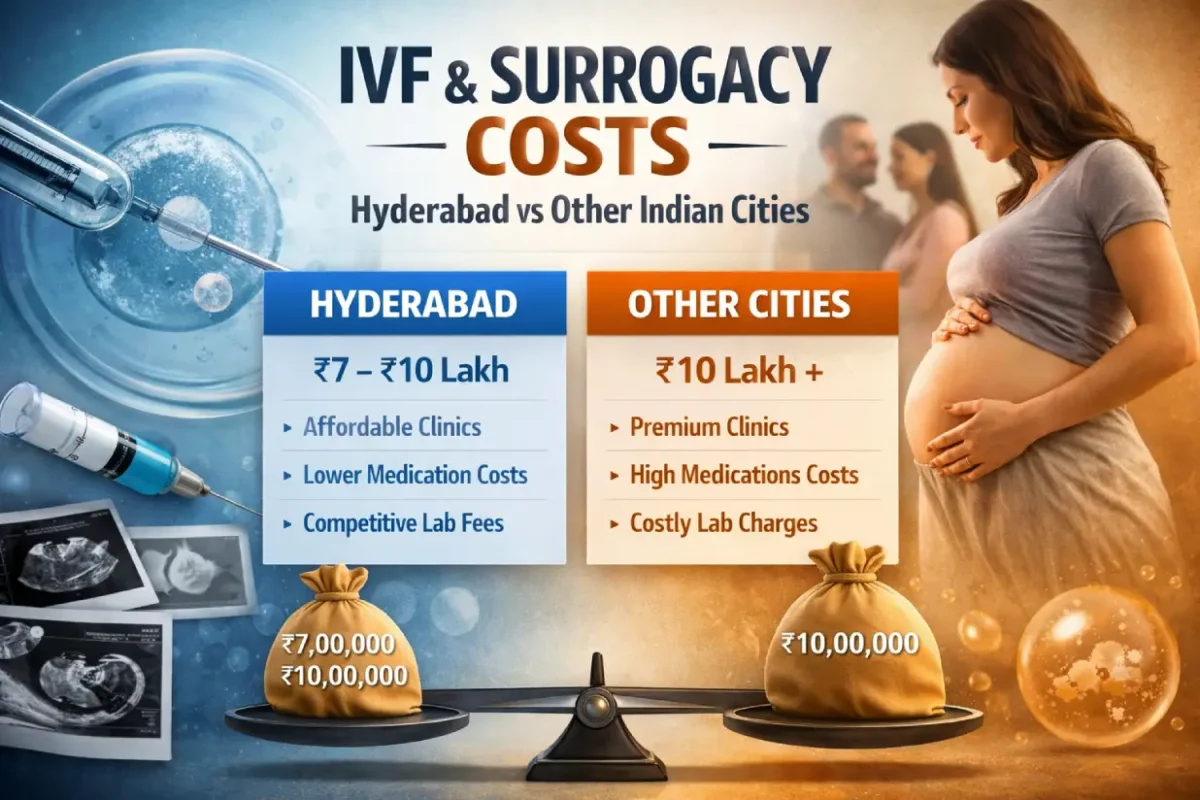
surrogacy-cost-in-hyderabad-1-1200x800.webp
12/Mar/2026

Surrogacy journey is one of the most significant decisions intended parents can make. If you’re considering surrogacy in Hyderabad, understanding the complete financial picture is crucial for proper with planning. This comprehensive guide breaks down all surrogacy costs in Hyderabad for 2026, including hidden expenses, legal requirements, and factors that influence the final investment.

Overview of Surrogacy Costs in Hyderabad 

Total Estimated Altruistic Surrogacy Cost in Hyderabad (2026): ₹7,00,000 – ₹10,00,000

Hyderabad has emerged as one of India’s leading destinations for surrogacy, offering world-class medical facilities at costs significantly lower than Western countries. The city is home to internationally accredited fertility clinics, experienced reproductive specialists, and comprehensive support services.

The total cost of surrogacy in Hyderabad varies widely based on multiple factors including the type of surrogacy (gestational vs traditional), medical complexity, clinic reputation, and whether you’re using donor eggs or sperm.

Why Choose Hyderabad for Surrogacy?

  • Advanced Medical Infrastructure: State-of-the-art fertility clinics with cutting-edge technology
  • Experienced Specialists: Highly qualified reproductive endocrinologists and embryologists
  • Cost-Effective: 60-70% lower than surrogacy costs in the US or Europe
  • Legal Framework: Clear regulatory guidelines under the Surrogacy (Regulation) Act, 2021
  • Support Services: Comprehensive counseling, legal, and psychological support

Complete Surrogacy Cost Breakdown in Hyderabad for 2026

Understanding where your money goes is essential. Here’s a detailed breakdown of surrogacy expenses in Hyderabad:

1. IVF and Medical Procedures: ₹2,50,000 – ₹4,50,000

  • Initial fertility assessment and screening
  • Egg retrieval and fertilization
  • Embryo culture and development
  • Embryo transfer procedure
  • Cryopreservation (freezing) of embryos
  • Medications for ovarian stimulation

2. Surrogate Mother Compensation: Not Allowed Altruistic Only

  • Monthly Checkup
  • Post-delivery recovery support

3. Medical Care: ₹2,50,000 – ₹4,00,000

  • Prenatal care and regular checkups
  • Ultrasounds and diagnostic tests
  • Vitamins and prenatal supplements
  • Hospitalization for delivery
  • Cesarean section (if required)
  • Post-delivery medical care

4. Agency/Clinic Coordination Fees: ₹2,00,000 – ₹4,00,000

  • Surrogate screening and matching
  • Case management and coordination
  • Psychological counseling services
  • Administrative support
  • Medical record management

5. Insurance: ₹1,00,000 – ₹2,00,000

  • Surrogate health insurance
  • Pregnancy complication coverage
  • Life insurance for surrogate
  • Newborn insurance

7. Miscellaneous Expenses: ₹50,000 – ₹1,50,000

  • Medicine & Injections 
  • Accommodation (if required)
  • Emergency medical expenses
  • Communication and coordination costs

Factors Affecting Surrogacy Costs in Hyderabad 

The final cost of your surrogacy journey depends on several variables:

1. Type of Surrogacy

  • Altruistic Surrogacy (₹7,00,000 – ₹25,00,000): The intended mother’s eggs are used
  • Traditional Surrogacy: Now prohibited under Indian law since 2021

3. Number of IVF Cycles

  • First attempt: Base cost
  • Additional cycles: ₹1,50,000 – ₹2,50,000 per cycle
  • Success rate considerations: Affects total investment

4. Clinic Reputation and Location

  • Premium clinics (Banjara Hills, Jubilee Hills): 15-25% higher
  • Mid-range clinics: Standard pricing
  • Emerging areas: 10-15% lower

5. Medical Complexity

  • Uncomplicated pregnancy: Base cost
  • High-risk pregnancy: Additional ₹2,00,000 – ₹5,00,000
  • Multiple births (twins/triplets): 30-50% cost increase
  • Premature delivery/NICU: ₹50,000 – ₹5,00,000 extra

6. Surrogate Screening Requirements

  • Standard screening: Included in base cost
  • Extensive medical history: May add ₹50,000 – ₹1,00,000
  • Genetic testing: Additional ₹75,000 – ₹1,50,000

7. Legal Compliance Level

  • Standard documentation: Base legal fees
  • Complex cases (international parents, single parents): 40-60% higher legal costs
  • Interstate coordination: Additional fees

Legal Framework and Compliance Costs of Surrogacy in Hyderabad

The Surrogacy (Regulation) Act, 2021

India’s surrogacy laws underwent major changes with the 2021 Act. Understanding these regulations is crucial:

Key Legal Requirements:

  • Eligibility Criteria
    • Only married Indian couples (married for 5+ years, wife aged 23-50, husband 26-55)
    • Certificate of essentiality from appropriate authority
    • Certificate of eligibility from appropriate authority
    • Parentage order from magistrate
  • Altruistic Surrogacy Only
    • Commercial surrogacy is prohibited
    • Surrogates can only be close relatives
    • Only “reasonable medical expenses” and insurance allowed
  • Surrogate Requirements
    • Must be a close relative of intended parents
    • Married woman with at least one biological child
    • Between 25-35 years of age
    • Can only be a surrogate once in her lifetime
    • Must provide informed consent

Legal Costs Breakdown:

  • Certificates and registrations: ₹50,000 – ₹1,00,000
  • Legal consultation and representation: ₹75,000 – ₹1,50,000
  • Surrogacy agreement drafting: ₹25,000 – ₹50,000
  • Court proceedings: ₹50,000 – ₹1,00,000

Important Note: The 2021 Act significantly restricts surrogacy availability in India. International intended parents and single individuals are currently not eligible. Consult with legal experts to understand your specific eligibility.

Compensation and Care Expenses for Altruistic Surrogacy in Hyderabad City

While commercial surrogacy is banned, the law allows for “reasonable expenses” for the surrogate:

Permissible Expenses:

  1. Medical Expenses (₹3,00,000 – ₹5,00,000)
  • All prenatal care and checkups
  • Medications and supplements
  • Hospitalization and delivery
  • Postpartum care for 6 months
  • Emergency medical care
  1. Insurance Coverage (₹1,00,000 – ₹2,00,000) if applicable
  • Comprehensive health insurance for 36 months
  • Life insurance coverage
  • Complication coverage
  1. Loss of Wages (Variable)
  • Compensation for time off work
  • Lost income during pregnancy
  • Recovery period compensation
  1. Travel and Accommodation (₹50,000 – ₹1,50,000) if you travelling from longer destination 
  • Transportation to medical appointments
  • Temporary accommodation if needed
  • Meal allowances during hospital stays
  1. Maternity Essentials (₹25,000 – ₹50,000)
  • Maternity clothing
  • Nutritional supplements
  • Comfort items during pregnancy

Regular Care Package

Most Hyderabad clinics offer comprehensive care packages:

  • Basic Package: ₹6,00,000 – ₹8,00,000
  • Premium Package: ₹9,00,000 – ₹12,00,000

Premium packages typically include enhanced nutrition plans, dedicated care coordinators, luxury accommodation options, and extended postpartum support.


Medical Procedures and Treatment Costs in Surrogacy Process

IVF Procedure Costs

Initial Consultation and Assessment (₹15,000 – ₹30,000)

  • Fertility evaluation for intended parents
  • Medical history review
  • Initial treatment planning

Ovarian Stimulation (₹50,000 – ₹1,00,000)

  • Hormone medications (Gonadotropins)
  • Monitoring ultrasounds
  • Blood tests
  • Dosage adjustments

Egg Retrieval (₹75,000 – ₹1,25,000)

  • Procedure costs
  • Anesthesia
  • Laboratory fees
  • Recovery room charges

Fertilization and Embryo Culture (₹50,000 – ₹1,00,000)

  • ICSI (Intracytoplasmic Sperm Injection) if needed
  • Embryo culture for 5-6 days
  • Embryologist fees
  • Laboratory consumables

Embryo Transfer (₹40,000 – ₹75,000)

  • Transfer procedure
  • Catheter and equipment
  • Ultrasound guidance
  • Post-transfer medications

Advanced Procedures (Optional)

  • PGT (Preimplantation Genetic Testing): ₹1,50,000 – ₹2,50,000
  • Assisted Hatching: ₹15,000 – ₹25,000
  • Embryo Freezing: ₹25,000 – ₹50,000 (first year)
  • Frozen Embryo Transfer (FET): ₹75,000 – ₹1,25,000

Pregnancy Monitoring Costs

First Trimester (₹25,000 – ₹50,000)

  • Beta hCG tests
  • Early pregnancy ultrasounds
  • Prenatal vitamins
  • Initial screening tests
  • Anomaly scan
  • Blood tests (glucose, anemia screening)
  • Monthly checkups
  • Additional ultrasounds
  • Growth scans
  • Non-stress tests
  • Pre-delivery consultations
  • Final preparations

Delivery Costs

  • Normal Delivery: ₹50,000 – ₹1,25,000
  • Cesarean Section: ₹1,00,000 – ₹2,50,000
  • NICU care (if required): ₹10,000 – ₹50,000 per day

Altruistic Surrogacy Cost in Hyderabad vs Other Indian Cities 

City Basic IVF Cycle Cost Clinic / Hospital Charges Medication & Injection Cost Lab & Embryology Cost Advanced Add-ons (ICSI, FET, etc.) Total Typical Range (Per Cycle)
Hyderabad ₹80,000 – ₹2,00,000 ₹10,000 – ₹40,000 (consultation, scans, OT) ₹50,000 – ₹1,00,000 Included / ₹30,000 – ₹60,000 ₹40,000 – ₹2,00,000 ₹1,00,000 – ₹2,50,000
Delhi ₹1,20,000 – ₹2,20,000 ₹15,000 – ₹50,000 ₹60,000 – ₹1,20,000 ₹40,000 – ₹70,000 ₹50,000 – ₹2,50,000 ₹1,75,000 – ₹3,00,000
Mumbai ₹1,50,000 – ₹2,50,000 ₹20,000 – ₹60,000 ₹70,000 – ₹1,50,000 ₹50,000 – ₹80,000 ₹60,000 – ₹2,50,000 ₹2,00,000 – ₹3,00,000
Bangalore ₹1,20,000 – ₹2,20,000 ₹15,000 – ₹50,000 ₹60,000 – ₹1,20,000 ₹40,000 – ₹70,000 ₹50,000 – ₹2,20,000 ₹1,80,000 – ₹2,80,000
Chennai ₹1,10,000 – ₹2,00,000 ₹10,000 – ₹45,000 ₹50,000 – ₹1,10,000 ₹40,000 – ₹60,000 ₹40,000 – ₹2,00,000 ₹1,75,000 – ₹2,50,000
Pune ₹1,20,000 – ₹2,00,000 ₹10,000 – ₹40,000 ₹50,000 – ₹1,00,000 ₹30,000 – ₹60,000 ₹40,000 – ₹2,00,000 ₹1,50,000 – ₹2,10,000
Kolkata ₹1,10,000 – ₹2,10,000 ₹10,000 – ₹40,000 ₹50,000 – ₹1,00,000 ₹30,000 – ₹60,000 ₹40,000 – ₹2,00,000 ₹1,75,000 – ₹2,25,000


Here’s how Hyderabad’s surrogacy costs compare with other major Indian cities:

Hyderabad Advantages:

  • Competitive pricing with premium quality
  • Lower cost of living reduces surrogate care expenses
  • Excellent medical infrastructure at 10-15% lower cost than Mumbai/Delhi
  • Transparent pricing with fewer hidden costs

Financial Planning and Payment Timeline 

Typical Payment Schedule

Understanding when payments are due helps with financial planning:

Stage 1: Initial Commitment (20-25% of total cost)

  • Registration fees
  • Initial consultations
  • Surrogate matching process
  • Legal retainer fees
  • Due: At contract signing

Stage 2: Medical Procedures Begin (25-30%)

  • IVF cycle costs
  • Medications
  • Egg retrieval and fertilization
  • Embryo transfer
  • Due: Before starting IVF treatment

Stage 3: Pregnancy Confirmation (15-20%)

  • regular checkup begins
  • Initial prenatal care
  • Insurance activation
  • Due: Upon pregnancy confirmation

Stage 4: During Pregnancy (20-25%)

  • Ongoing medical care
  • Monthly surrogate expenses
  • Ultrasounds and tests
  • Due: Monthly throughout pregnancy

Stage 5: Delivery and Completion (15-20%)

  • Hospital delivery costs
  • Final surrogate compensation
  • Legal documentation
  • Birth certificate processing
  • Due: At delivery and post-birth formalities

Financing Options

  1. Personal Savings
  • Most common method
  • No interest costs
  • Complete financial freedom
  1. Medical Loans
  • Many banks offer fertility treatment loans
  • Interest rates: 10-14% per annum
  • Loan amounts: ₹5 lakhs – ₹25 lakhs
  • Tenure: 1-5 years
  1. Employer Benefits
  • Some companies offer fertility benefits
  • Check HR policies
  • May cover 25-50% of costs
  1. Family Support
  • Interest-free borrowing from family
  • Flexible repayment terms
  1. Payment Plans
  • Some clinics offer installment options
  • Spread cost over treatment duration
  • May include small administrative fee

How to Reduce Surrogacy Costs

While surrogacy is a significant investment, there are legitimate ways to manage costs:

1. Choose the Right Clinic

  • Research multiple clinics
  • Compare package deals
  • Look for transparent pricing
  • Check success rates (higher success = fewer cycles = lower total cost)

2. Optimize IVF Cycles

  • Follow medical advice strictly to improve success rates
  • Consider lifestyle changes before treatment
  • Genetic testing can reduce failed cycles
  • Freeze extra embryos for future attempts

3. Plan Comprehensively

  • Budget for contingencies (15-20% buffer)
  • Understand all potential costs upfront
  • Avoid surprise expenses through clear contracts

4. Consider Timing

  • Some clinics offer seasonal discounts
  • Package deals during promotional periods
  • Group IVF cycles may reduce per-cycle costs

5. Negotiate Package Deals

  • Ask about all-inclusive packages
  • Bundle services for better rates
  • Multi-cycle discounts
  • Loyalty programs for repeat patients

6. Reduce Legal Complexity

  • Work with experienced attorneys from the start
  • Complete documentation properly first time
  • Avoid legal delays and additional fees

7. Insurance Optimization

  • Check if existing health insurance covers any procedures
  • Compare insurance quotes for surrogate
  • Look for comprehensive coverage to avoid out-of-pocket emergency costs

What NOT to Compromise On:

  • Clinic accreditation and reputation
  • Legal compliance and documentation
  • Surrogate health and wellbeing
  • Quality of medical car


🔹 Success Rate Impact: Higher with donor eggs (60-70%) vs own eggs 35+ years (30-40%)

🔹 Age Factor: Women under 30 have lowest total costs due to fewer cycles needed

🔹 Twins/Multiples: Can increase costs by 30-50%

🔹 Contingency Fund: Always budget 20% extra for unexpected situations

Important Notes:

  • Donor egg costs are significantly higher than sperm due to the invasive retrieval process
  • Younger egg donors (21-28) have better success rates, potentially reducing overall costs through fewer cycles
  • Using frozen embryos from first cycle for second pregnancy is much cheaper (₹75,000 – ₹1,25,000 for FET)
  • All-inclusive packages may seem expensive but protect against multiple-cycle costs
  • Premium clinics charge 20-35% more but often have higher success rates

Frequently Asked Questions About Surrogacy in Hyderabad

Q1: Is surrogacy legal in Hyderabad in 2026?

A: Yes, but only altruistic surrogacy for eligible Indian married couples under the Surrogacy (Regulation) Act, 2021. Commercial surrogacy and surrogacy for international or single parents is not permitted.

Q2: What’s included in the average ₹7-10 lakh cost?

A: Typically includes IVF procedures, medical care and clinic coordination. Always request a detailed cost breakdown.

Q3: Can I choose my surrogate in Hyderabad?

A: Under current law, the surrogate must be a close relative of the intended parents. Clinics cannot provide unrelated surrogates.

Q4: How long does the entire surrogacy process take?

A: From initial consultation to bringing your baby home: 18-24 months, including legal processes, IVF cycles, pregnancy, and documentation.

Q5: What if the first IVF cycle fails?

A: Additional cycles cost ₹1.5-2.5 lakhs each. Many clinics offer multi-cycle packages at discounted rates. Using frozen embryos from the first cycle is more cost-effective than starting fresh.

Q6: Are there hidden costs in surrogacy?

A: Reputable clinics provide transparent pricing. Potential additional costs include pregnancy complications, multiple births, additional IVF cycles, and extended NICU care. Budget 20% extra for contingencies.

Q7: Does insurance cover surrogacy costs?

A: Most standard health insurance doesn’t cover surrogacy in India. You’ll need to purchase separate insurance for the surrogate, which is legally required.

Q8: Can NRIs (Non-Resident Indians) pursue surrogacy in Hyderabad?

A: NRIs who are married and meet all eligibility criteria under the 2021 Act may be eligible, but this is a complex legal area. Consultation with specialized legal experts is essential.

Q9: What happens if there are pregnancy complications?

A: Your contract should address this. Additional medical costs for complications are typically the intended parents’ responsibility. Comprehensive insurance helps cover these scenarios.

Q10: How do I choose a reliable surrogacy clinic in Hyderabad?

A: Look for:

  • ART (Assisted Reproductive Technology) registration
  • High success rates (50%+ for IVF)
  • Transparent cost structures
  • Experienced reproductive endocrinologists
  • Positive patient reviews
  • Comprehensive legal support
  • Accreditation from national/international bodies

Final Thoughts: Planning Your Surrogacy Journey in Hyderabad

Surrogacy is a profound journey that requires careful emotional, medical, and financial preparation. While the costs may seem substantial—ranging from ₹15-25 lakhs in Hyderabad—you’re investing in the precious gift of parenthood.

Key Takeaways:

Budget Realistically: Plan for ₹18-25 lakhs with a 20% contingency buffer

Understand Legal Requirements: Ensure you meet eligibility criteria under the 2021 Surrogacy Act

Choose Quality Over Cost: Success rates and ethical practices matter more than saving a few lakhs

Get Everything in Writing: Clear contracts prevent misunderstandings and additional costs

Plan for Contingencies: Multiple cycles, complications, or twins can increase costs significantly

Prioritize Emotional Support: Budget for counseling services—the emotional journey is as important as the medical one

Next Steps

If you’re considering surrogacy in Hyderabad:

  • Research thoroughly: Shortlist 3-5 reputed clinics
  • Schedule consultations: Most offer free initial consultations
  • Understand your eligibility: Consult with legal experts on the 2021 Act requirements
  • Get medical evaluations: Assess your fertility status
  • Prepare financially: Explore financing options and create a payment plan
  • Build your support system: Emotional support from family, friends, and professionals is crucial

Ready to Begin Your Surrogacy Journey?

The path to parenthood through surrogacy in Hyderabad combines world-class medical care with compassionate support at accessible costs. While the investment is significant, the reward holding your child in your arms is priceless.

Schedule consultations with Hyderabad’s leading fertility clinics to discuss your specific situation, get personalized cost estimates, and take the first step toward building your family.

Disclaimer: Costs mentioned are approximate ranges based on 2026 market research. Actual costs may vary based on individual circumstances, clinic selection, and medical requirements. Always obtain detailed written quotes from clinics and legal advisors before proceeding. This guide is for informational purposes only and does not constitute medical or legal advice.


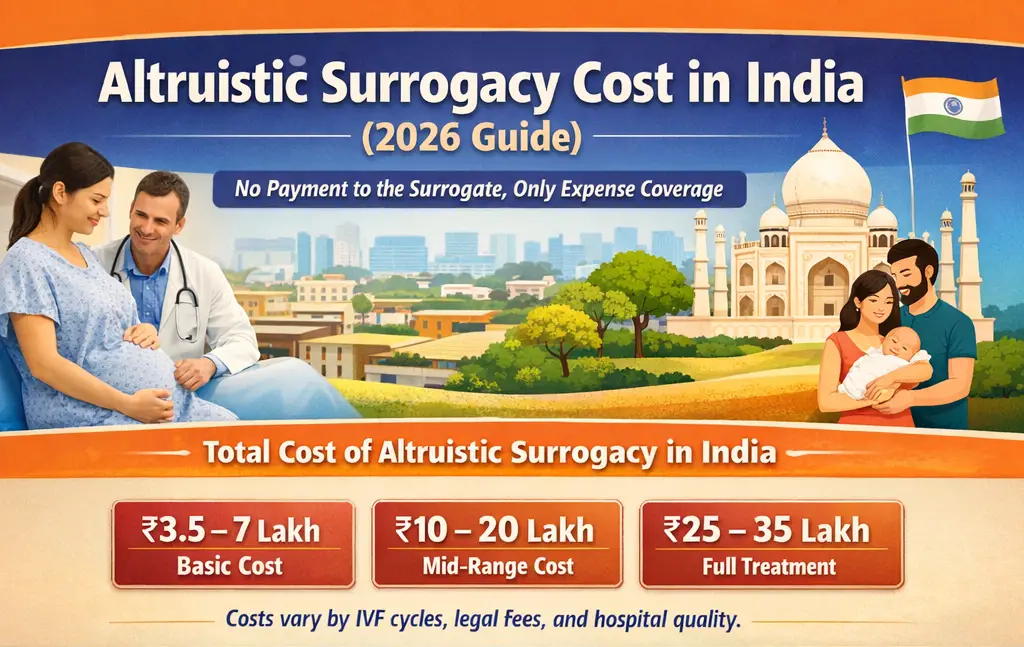
Surrogacy-Cost-in-India-2026.webp
12/Mar/2026

Complete Surrogacy Cost in India & Process Guide (2026)

Surrogacy allows intended parents to have a biological child when pregnancy is medically impossible. In India, surrogacy is regulated under the Surrogacy (Regulation) Act 2021, which allows only altruistic surrogacy.

Unlike commercial surrogacy programs in countries like the United States, the surrogate mother in India cannot receive financial compensation beyond medical and pregnancy-related expenses.

However, intended parents must still cover medical treatment, legal documentation, surrogate care, and hospital costs.

What is Altruistic Surrogacy in India?

Altruistic surrogacy means a woman carries a pregnancy for intended parents without commercial payment.

Only the following expenses are allowed:

  • Medical expenses

  • Insurance for surrogate mother

  • Pregnancy-related care

  • Hospital delivery costs

  • Legal documentation

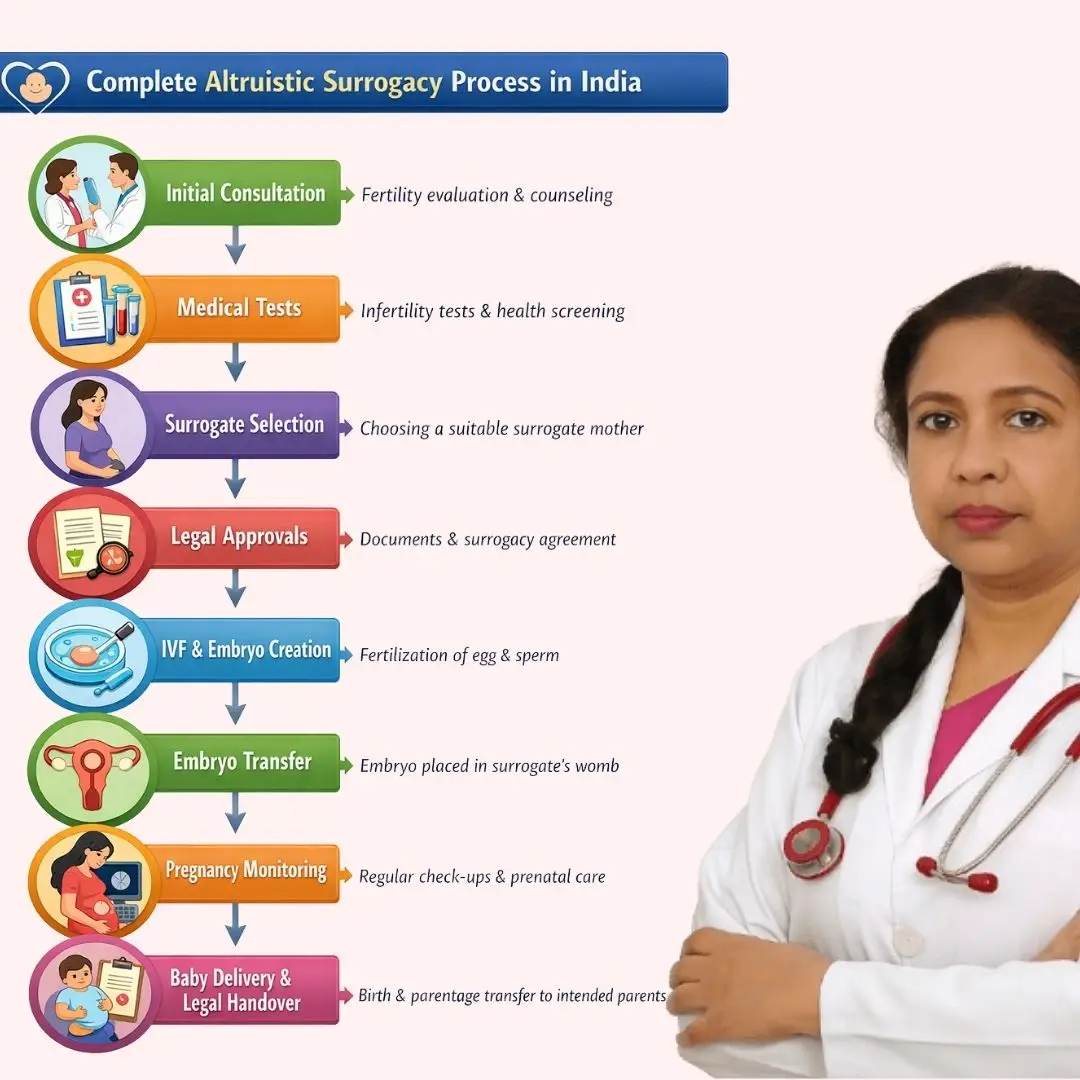
Surrogacy Process in India Explain by Dr. Nalini Gupta

surrogacy process in india

Who Can Apply for Surrogacy in India?

Under Indian law, surrogacy is allowed only for eligible individuals.

Eligibility Criteria Requirement
Married Couple Married for 5 years
Female Age 23 – 50 years
Male Age 26 – 55 years
Medical Need Proven infertility
Surrogate Mother Married woman with at least one child

Altruistic Surrogacy in India – Complete Cost Breakdown (2026)

Even though commercial surrogacy is illegal in India, intended parents are responsible for medical treatment, surrogate care, insurance, legal documentation, and delivery expenses.

The overall cost generally ranges between ₹20,00,000 – ₹35,00,000 depending on clinic, IVF cycles, and medical conditions.

1. IVF Treatment Cost Breakdown in Surrogacy

IVF treatment is the first step of the surrogacy process where embryos are created and transferred to the surrogate mother.

IVF Treatment Component Estimated Cost (INR)
Fertility Consultation ₹2,000 – ₹5,000
Medical Testing (Hormones, Blood Tests) ₹10,000 – ₹25,000
Ultrasound & Monitoring ₹8,000 – ₹20,000
Ovarian Stimulation Medicines ₹60,000 – ₹1,20,000
Egg Retrieval Procedure ₹80,000 – ₹1,20,000
Sperm Preparation ₹10,000 – ₹25,000
IVF Laboratory Fertilization ₹1,00,000 – ₹1,50,000
Embryo Culture ₹30,000 – ₹50,000
Embryo Transfer Procedure ₹50,000 – ₹80,000

Total IVF Cost

₹3,50,000 – ₹5,00,000

2. Surrogate Mother Medical Expenses in India

These costs include all pregnancy-related medical care for the surrogate mother.

Surrogate Care Expense Estimated Cost
Surrogate Medical Screening ₹20,000 – ₹40,000
Initial Health Evaluation ₹15,000 – ₹30,000
Prenatal Care (9 months) ₹1,00,000 – ₹2,00,000
Regular Pregnancy Monitoring ₹50,000 – ₹1,00,000
Nutrition & Supplements ₹40,000 – ₹80,000
Delivery Hospital Charges ₹2,00,000 – ₹4,00,000

Total Surrogate Medical Care

₹4,00,000 – ₹8,00,000

3. Legal & Documentation Costs for Surrogacy in India

Surrogacy in India requires multiple legal approvals and contracts.

Legal Service Estimated Cost
Surrogacy Agreement Drafting ₹1,00,000 – ₹2,00,000
Legal Consultation ₹50,000 – ₹1,00,000
Court Documentation ₹50,000 – ₹1,50,000
Parentage Order Processing ₹75,000 – ₹1,25,000
Government Certificates ₹25,000 – ₹50,000

Total Legal Cost

₹3,00,000 – ₹5,00,000

4. Surrogate Insurance Cost

Indian law requires insurance coverage for the surrogate mother for 36 months.

Insurance Type Estimated Cost
Health Insurance ₹30,000 – ₹50,000
Pregnancy Medical Coverage ₹40,000 – ₹80,000
Post-delivery Coverage ₹20,000 – ₹40,000

Total Insurance Cost

₹90,000 – ₹1,70,000

5. Surrogate Pregnancy Support Expenses

Although commercial payment is not allowed, parents can cover reasonable pregnancy-related expenses.

Expense Type Estimated Cost
Maternity Clothes ₹20,000 – ₹40,000
Transportation for Checkups ₹25,000 – ₹50,000
Nutrition Allowance ₹50,000 – ₹80,000
Household Support ₹30,000 – ₹60,000
Lost Wages Compensation ₹50,000 – ₹1,00,000

Total Support Expenses

₹1,75,000 – ₹3,30,000

6. Hospital Delivery Charges

Delivery costs vary depending on hospital type and complications.

Delivery Type Estimated Cost
Normal Delivery ₹1,50,000 – ₹2,50,000
C-Section Delivery ₹2,50,000 – ₹4,50,000
NICU Care (if required) ₹1,00,000 – ₹3,00,000

Average Delivery Cost

₹2,00,000 – ₹4,50,000

7. Additional Optional Medical Costs

Some situations may require additional medical procedures.

Optional Procedure Estimated Cost
ICSI Fertilization ₹50,000 – ₹80,000
PGT Genetic Testing ₹1,50,000 – ₹3,00,000
Donor Egg IVF ₹1,50,000 – ₹2,50,000
Embryo Freezing ₹40,000 – ₹60,000
Frozen Embryo Transfer ₹60,000 – ₹1,20,000

8. Total Estimated Surrogacy Cost in India

Cost Category Estimated Cost
IVF Treatment ₹3,50,000 – ₹5,00,000
Surrogate Medical Care ₹4,00,000 – ₹8,00,000
Legal Documentation ₹3,00,000 – ₹5,00,000
Insurance ₹90,000 – ₹1,70,000
Pregnancy Support ₹1,75,000 – ₹3,30,000
Hospital Delivery ₹2,00,000 – ₹4,50,000

Total Estimated Cost

₹20,00,000 – ₹35,00,000

9. Payment Schedule Example

Many fertility clinics follow a stage-wise payment structure.

Payment Stage Estimated Amount
Initial Consultation & Tests ₹50,000 – ₹1,00,000
Start of IVF Cycle ₹2,00,000 – ₹3,00,000
Embryo Transfer ₹1,50,000 – ₹2,50,000
Pregnancy Confirmation ₹3,00,000 – ₹5,00,000
Delivery & Hospital Charges ₹2,00,000 – ₹4,00,000

Surrogacy Cost in India with Egg Donor vs Sperm Donor vs Both Donors

Surrogacy Type Estimated Total Cost (INR) Key Cost Factors Included
Surrogacy with Intended Parents’ Eggs & Sperm ₹20,00,000 – ₹28,00,000 IVF cycle, medical care, legal fees, insurance, delivery
Surrogacy with Egg Donor (Altruistic Only) ₹24,00,000 – ₹32,00,000 Egg donor compensation, donor screening, IVF treatment, surrogate care
Surrogacy with Sperm Donor Altruistic Only) ₹21,00,000 – ₹29,00,000 Sperm donor fee, IVF procedure, surrogate care, legal process
Surrogacy with Egg & Sperm Donor Altruistic Only) ₹26,00,000 – ₹35,00,000 Both donor programs, IVF lab work, surrogate pregnancy, legal documentation

Detailed Egg Donor Surrogacy Cost Breakdown

When intended mothers cannot produce viable eggs, an egg donor is used.

Cost Component Estimated Cost in INR
Egg Donor Screening & Testing ₹20,000 – ₹40,000
Egg Donor Compensation Altruistic Only No fee
Ovarian Stimulation Medicines ₹60,000 – ₹1,00,000
Egg Retrieval Procedure ₹80,000 – ₹1,20,000
IVF Fertilization ₹1,00,000 – ₹1,50,000
Embryo Transfer to Surrogate ₹50,000 – ₹80,000

Total Egg Donor IVF Cost

₹4,00,000 – ₹6,00,000

Detailed Sperm Donor Surrogacy Cost Breakdown

Used when the intended father cannot provide viable sperm.

Cost Component Estimated Cost in INR
Sperm Donor Selection ₹10,000 – ₹20,000
Sperm Donor Fee Altruistic Only No Fee
Medical Screening ₹10,000 – ₹20,000
Sperm Processing & Freezing ₹10,000 – ₹25,000
IVF Fertilization ₹1,00,000 – ₹1,50,000

Total Sperm Donor Cost

₹1,50,000 – ₹2,50,000

Surrogacy Cost with Both Egg & Sperm Donor

In cases where both parents cannot contribute gametes, both donors are required.

Cost Component Estimated Cost in INR
Egg Donor Program Altruistic Only Fee
Sperm Donor Program Altruistic Only  No Fee
IVF Laboratory Fertilization ₹1,00,000 – ₹1,50,000
Embryo Transfer ₹50,000 – ₹80,000

Total Donor IVF Cost

₹1,50,000 – ₹2,00,000

Comparison of IVF Cost Based on Donor Type

IVF Type Estimated IVF Cost in INR
IVF with Own Eggs & Sperm ₹3,50,000 – ₹5,00,000
IVF with Egg Donor (Altruistic Only) ₹4,50,000 – ₹6,00,000
IVF with Sperm Donor (Altruistic Only) ₹3,80,000 – ₹5,20,000
IVF with Both Donors (Altruistic Only) ₹5,00,000 – ₹7,00,000

When Each Surrogacy Option Is Used

Situation Recommended Option
Female infertility / low ovarian reserve Egg Donor Surrogacy
Male infertility / azoospermia Sperm Donor Surrogacy
Both partners infertile Egg + Sperm Donor Surrogacy
Healthy embryos available Surrogacy with own gametes

Success Rate Comparison

Surrogacy Type Average Success Rate in %
Own Eggs & Sperm 60% – 70%
Egg Donor Surrogacy 70% – 80%
Sperm Donor Surrogacy 60% – 70%
Both Donors 70% – 80%

Egg donor programs generally show higher success rates because donors are typically young and medically screened.

Surrogacy Expense after Prgenancy in Details for 2026

1. Monthly Pregnancy Checkup & Expense Table (9-Month Breakdown)

These expenses cover prenatal care, nutrition, monitoring, and pregnancy support for the surrogate mother.

Pregnancy Month Medical Monitoring Nutrition & Supplements Diet Recommendation fee Transportation Miscellaneous Care Estimated Monthly Cost
Month 1 ₹10,000 ₹5,000 ₹3,000 ₹2,000 ₹20,000
Month 2 ₹10,000 ₹5,000 ₹3,000 ₹2,000 ₹20,000
Month 3 ₹12,000 ₹6,000 ₹3,000 ₹3,000 ₹24,000
Month 4 ₹12,000 ₹6,000 ₹3,000 ₹3,000 ₹24,000
Month 5 ₹15,000 ₹7,000 ₹4,000 ₹3,000 ₹29,000
Month 6 ₹15,000 ₹7,000 ₹4,000 ₹4,000 ₹30,000
Month 7 ₹18,000 ₹8,000 ₹4,000 ₹5,000 ₹35,000
Month 8 ₹20,000 ₹8,000 ₹5,000 ₹5,000 ₹38,000
Month 9 ₹25,000 ₹10,000 ₹5,000 ₹5,000 ₹45,000

Total Pregnancy Support Expenses

₹2,65,000 – ₹3,00,000 (approx.)

2. Stage-Wise Payment Schedule for Surrogacy Programs

Most fertility centers follow a milestone-based payment structure to distribute costs across the surrogacy journey.

Payment Stage Description Estimated Amount
Initial Consultation Fertility consultation, diagnosis, and medical evaluation ₹25,000 – ₹50,000
IVF Cycle Start Ovarian stimulation, egg retrieval, fertilization ₹2,50,000 – ₹3,50,000
Embryo Transfer Embryo transfer procedure to surrogate ₹1,00,000 – ₹2,00,000
Pregnancy Confirmation Surrogate pregnancy care and monitoring ₹2,00,000 – ₹4,00,000
Second Trimester Care Regular monitoring and medical expenses ₹2,00,000 – ₹3,00,000
Third Trimester Care Intensive monitoring and delivery preparation ₹2,00,000 – ₹3,00,000
Delivery & Hospital Charges Birth, hospital stay, and newborn care ₹2,00,000 – ₹4,00,000

3. Detailed Surrogacy Package Pricing

(Standard / Premium / Guaranteed Programs)

Many clinics structure surrogacy programs into packages for clarity.

Package Type Estimated Cost Key Features
Standard Surrogacy Program ₹20,00,000 – ₹25,00,000 1 IVF cycle, embryo transfer, surrogate medical care, legal documentation, delivery charges
Premium Surrogacy Program ₹25,00,000 – ₹30,00,000 2 IVF cycles, advanced embryo monitoring, enhanced pregnancy care, priority medical support
Guaranteed Surrogacy Program ₹30,00,000 – ₹35,00,000 Multiple IVF attempts, donor support options, higher success assurance, full pregnancy care

Package Feature Comparison

Feature Standard Premium Guaranteed
IVF Cycles Included 1 2 Multiple
Embryo Transfer
Surrogate Medical Care
Legal Documentation
Pregnancy Monitoring Basic Advanced Comprehensive
Delivery Charges
Success Assurance Limited Moderate Highest

Altruistic Surrogacy Cost in India by Top 10 Surrogacy Centres

No. Surrogacy Centre City Estimated Surrogacy Cost (INR) IVF Cost Success Rate (Approx.)
1 Dr. Nalini Gupta IVF & Fertility Center Delhi ₹14,00,000 – ₹20,00,000 ₹1.3L – ₹2L 70–78%
2 Indira IVF Jaipur / Pan-India ₹15,00,000 – ₹28,00,000 ₹1.2L – ₹2L 65–72%
3 Nova IVF Fertility Mumbai / Delhi / Bangalore ₹15,00,000 – ₹22,00,000 ₹1.5L – ₹2.5L 70%
4 Kiran Infertility Centre Hyderabad ₹14,00,000 – ₹20,00,000 ₹1.5L – ₹2.5L 70–75%
5 Apollo Fertility Chennai / Hyderabad ₹16,00,000 – ₹24,00,000 ₹1.5L – ₹2.5L 65–70%
6 Cloudnine Fertility Bangalore ₹15,00,000 – ₹22,00,000 ₹1.8L – ₹2.5L 65–70%
7 Saraogi Hospital & IRIS IVF Mumbai ₹15,00,000 – ₹20,00,000 ₹1.5L 65–72%
8 Akanksha IVF Centre Anand, Gujarat ₹16,00,000 – ₹18,00,000 ₹1.5L – ₹2L 70–75%
9 ART Fertility Clinics Gurgaon ₹18,00,000 – ₹25,00,000 ₹2L – ₹3L 70–75%
10 Milann Fertility Center Bangalore ₹15,00,000 – ₹22,00,000 ₹1.5L – ₹2.5L 65–70%

Altruistic Surrogacy Cost in India (City-Wise Costs – 2026)

City / Region Estimated Surrogacy Cost (INR) IVF & Medical Cost Legal & Documentation Delivery & Hospital Notes
Delhi NCR ₹13,00,000 – ₹23,70,000 ₹4L – ₹6L ₹1L – ₹3L ₹2L – ₹5L Advanced fertility clinics & higher medical infrastructure
Mumbai ₹15,00,000 – ₹25,00,000 ₹4L – ₹6L ₹1.5L – ₹3L ₹3L – ₹6L One of the most expensive cities
Bangalore ₹14,00,000 – ₹20,00,000 ₹3L – ₹5L ₹1L – ₹2L ₹2L – ₹4L Popular fertility destination
Hyderabad ₹12,00,000 – ₹18,00,000 ₹3L – ₹4.5L ₹1L – ₹2L ₹2L – ₹4L Good IVF success rate
Chennai ₹12,00,000 – ₹20,00,000 ₹2.5L – ₹4L ₹1L – ₹2L ₹2L – ₹4L One of the most affordable metro cities
Kolkata ₹15,00,000 – ₹18,00,000 ₹2.5L – ₹3.5L ₹1L – ₹2L ₹2L – ₹3L Lower medical and living costs
Pune ₹10,00,000 – ₹18,00,000 ₹3L – ₹4L ₹1L – ₹2L ₹2L – ₹3L 30–40% cheaper than Mumbai
Ahmedabad ₹10,00,000 – ₹20,00,000 ₹3L – ₹4L ₹1L – ₹2L ₹2L – ₹3L Budget-friendly fertility services
Lucknow ₹14,65,000 – ₹24,00,000 ₹3L – ₹5L ₹1L – ₹2L ₹2L – ₹4L Increasing fertility clinic availability
Jaipur / Rajasthan ₹15,90,000 – ₹20,00,000 ₹3L – ₹5L ₹1L – ₹2L ₹2L – ₹3L Moderate cost region

Surrogacy Cost Comparison (India vs USA vs Canada vs UK)

Surrogacy costs vary significantly depending on the country’s legal system, surrogate compensation rules, and healthcare costs. Countries that allow commercial surrogacy, like the United States, are much more expensive than countries with altruistic models.

Country Surrogacy Type Average Total Cost Key Cost Factors
India Altruistic (restricted) ₹15,00,000 – ₹30,00,000 ($18k – $35k) IVF treatment, legal approvals, surrogate medical care
United States Commercial $120,000 – $250,000 (₹1 – ₹2+ crore) Surrogate compensation, agency fees, insurance, IVF
Canada Altruistic $80,000 – $120,000 (₹65 – ₹1 crore) Expense reimbursement only, legal costs, IVF
United Kingdom Altruistic £40,000 – £60,000 (₹40 – ₹65 lakh) Surrogate expenses, fertility treatment, legal process

Key Differences

Factor India USA Canada UK
Surrogate Payment Not allowed Paid ($40k–$60k typical) Expense reimbursement Expense reimbursement
Agency Fees Limited High Moderate Low
Legal Complexity Moderate High but structured Moderate High (parental order needed)
Foreign Intended Parents Not allowed Allowed Allowed Allowed

Commercial surrogacy in the U.S. raises total costs significantly due to agency fees, surrogate compensation, and insurance coverage, often reaching $150k–$200k or more.


Medical-Visa-for-IVF-Surrogacy-in-India-1200x800.webp
06/Mar/2026

For many international couples struggling with infertility, India has become one of the most trusted destinations for advanced fertility treatments such as In Vitro Fertilization (IVF) and surrogacy consultation. With highly skilled specialists, modern reproductive technology, and comparatively affordable treatment costs, India attracts patients from across the world seeking hope for parenthood.

However, before traveling for fertility treatment, patients must understand an important requirement: the Medical Visa for India. This visa allows foreign nationals to enter India specifically for medical treatment at recognized hospitals or fertility clinics.

In this comprehensive guide, Dr. Nalini Gupta a fertility specialist, explains the Medical Visa process for IVF and fertility treatments in India in 2026, including eligibility criteria, required documents, step-by-step application procedures, and important legal considerations regarding surrogacy.

Understanding the Medical Visa for IVF, Surrogacy & Fertility Treatments in India

A Medical Visa (MED Visa) is issued by the Government of India to foreign nationals traveling to the country for specialized medical treatment. This visa category is designed for patients seeking treatment at recognized hospitals or clinics in India.

For fertility treatments such as IVF, ICSI, egg donation, embryo transfer, and fertility preservation, international patients usually apply under the Medical Visa category.

In addition, up to two attendants (usually family members) may accompany the patient under a Medical Attendant Visa (MED-X Visa).

Why a Medical Visa Is Required for IVF in India

Unlike a tourist visa, a medical visa ensures that:

  • The patient is visiting for approved medical treatment
  • The clinic is a recognized medical institution
  • Authorities can verify treatment documentation
  • Immigration rules for extended stay are legally followed

This visa is often granted with multiple entries, which is important because IVF treatments sometimes require multiple visits over several months.

Fertility Treatments That Covered Under India’s Medical Visa

Patients can apply for a medical visa when traveling for advanced reproductive procedures, including:

1. In Vitro Fertilization (IVF)

IVF involves fertilizing an egg with sperm in a laboratory and transferring the embryo into the uterus.

2. Intracytoplasmic Sperm Injection (ICSI)

A specialized IVF technique where a single sperm is injected directly into an egg.

3. Egg Donation Programs

Patients with poor ovarian reserve or premature ovarian failure may require donor eggs.

4. Embryo Freezing & Fertility Preservation

Women undergoing medical treatments like chemotherapy may preserve eggs or embryos.

5. Male Infertility Treatments

Procedures such as TESA, PESA, and micro-TESE are performed for sperm retrieval.

⚠️ Important Legal Note:
Commercial surrogacy is not permitted for foreign nationals in India under the Surrogacy (Regulation) Act, 2021. Foreign couples may visit India for fertility consultations or IVF, but surrogacy is restricted mainly to Indian married couples under strict regulations. Patients should consult fertility experts for updated legal guidance.

Eligibility Criteria for a Medical Visa in India (2026)

To qualify for a medical visa for fertility treatment in India, applicants must meet certain conditions.

1. Genuine Medical Need

Applicants must provide proof of infertility diagnosis or medical recommendation for fertility treatment.

2. Treatment Confirmation from an Indian Clinic

A recognized hospital or fertility center in India must provide an invitation or treatment confirmation letter.

3. Financial Capability

Patients must demonstrate they can cover treatment expenses, travel, and stay in India.

4. Valid Passport

Applicants must have a passport valid for at least six months beyond travel dates.

5. No Security Restrictions

Applicants must not be flagged for immigration or security concerns.

List of Documents Required for Medical Visa Application

Preparing accurate documentation significantly increases visa approval chances.

Essential Documents Include

  1. Valid Passport
  2. Completed Indian Medical Visa Application Form
  3. Recent Passport-Size Photographs
  4. Medical Reports or Infertility Diagnosis
  5. Letter from Indian Fertility Clinic
  6. Proof of Financial Means
  7. Travel Itinerary
  8. Visa Fee Payment Receipt

Additional documents may include:

  • Marriage certificate (in some fertility programs)
  • Identity documents
  • Medical history reports

Step-by-Step Guide: How to Apply for a Medical Visa for IVF in India

Applying for an Indian medical visa has become more streamlined with online systems.

Step 1: Obtain a Medical Invitation Letter

First, contact a recognized fertility clinic in India. The clinic will review medical reports and issue a treatment confirmation letter.

This letter is essential for the visa application.

Step 2: Complete the Online Visa Application

Applicants must complete the visa application form through the Indian government visa portal at: https://indianfrro.gov.in/frro/medicalvaluetravel/

Information required includes:

  • Personal details
  • Passport information
  • Travel details
  • Medical treatment purpose

Step 3: Upload Documents

Applicants must upload required documents including:

  • Passport copy
  • Photograph
  • Medical reports
  • Clinic invitation letter

Step 4: Schedule Visa Appointment

In many countries, applicants must visit an Indian embassy or authorized visa center to submit biometrics and documents.

Step 5: Pay Visa Fees

Fees vary depending on nationality and visa duration.

Payment is usually completed online or through the visa center.

Step 6: Visa Processing

Medical visas are generally processed within:

5 to 10 working days in most cases.

However, processing times may vary depending on the country.

Duration and Validity of the Medical Visa

Typically, a medical visa for fertility treatment offers:

  • Validity: Up to 1 year
  • Multiple Entries: Allowed
  • Extension: Possible if treatment continues

Patients undergoing IVF cycles may need extended stays for procedures such as embryo transfer and monitoring.

Why Many International Patients Choose India for IVF

India remains one of the most sought-after destinations for fertility treatment.

Key Advantages

  1. Affordable Treatment Costs
    IVF treatment in India is significantly cheaper compared to the US, UK, and Europe.
  2. Advanced Technology
    Many fertility centers use cutting-edge reproductive technologies.
  3. Experienced Specialists
    India has internationally trained fertility doctors with extensive experience.
  4. High Success Rates
    Many clinics report competitive success rates comparable to global standards.
  5. Shorter Waiting Times
    Unlike many Western countries, treatment scheduling is usually faster.

Important Legal Considerations About Surrogacy in India

Foreign couples should understand the updated legal framework.

Under the Surrogacy Regulation Act (2021):

  • Commercial surrogacy is banned
  • Only altruistic surrogacy is allowed
  • Surrogacy is restricted mainly to Indian married couples
  • Strict eligibility criteria apply

Therefore, foreign nationals visiting India primarily come for IVF, fertility diagnosis, and consultation, rather than surrogacy arrangements.

Patients are strongly advised to consult qualified fertility experts for legal guidance before planning treatment.

Expert Advice from Dr. Nalini Gupta

According to fertility specialists, the most common mistake international patients make is starting visa applications without consulting a fertility clinic first.

A clinic consultation helps determine:

  • The most suitable fertility treatment
  • Required diagnostic tests
  • Estimated treatment timeline
  • Documentation needed for visa approval

Proper planning ensures a smoother medical journey.

Medical Visa Cost for IVF Treatment in India (2026)

When international patients travel to India for fertility treatments such as IVF, they must apply for a Medical Visa (MED Visa). The visa process involves several small but important expenses including application fees, documentation, and visa center service charges.

Below is a detailed cost breakdown of the Medical Visa process.

Visa Process Step Estimated Cost (USD) Estimated Cost (INR) Details
Online Medical Visa Application Fee $80 – $120 ₹6,500 – ₹10,000 Fee paid while submitting the Indian Medical Visa application through the official visa portal
Visa Processing / Service Center Fee $20 – $40 ₹1,500 – ₹3,500 Charged by visa outsourcing centers such as VFS Global or embassy processing services
Biometric Appointment Fee $10 – $25 ₹800 – ₹2,000 Fee for biometric data collection (fingerprints and photograph) during visa appointment
Document Verification / Scanning Fee $5 – $15 ₹400 – ₹1,200 Optional service provided by visa centers for document scanning and verification
Medical Attendant Visa Fee (Per Person) $80 – $120 ₹6,500 – ₹10,000 Visa fee for up to two family members accompanying the patient
Urgent / Priority Visa Processing (Optional) $30 – $100 ₹2,500 – ₹8,000 Fast-track processing service if urgent medical travel is required
Travel Insurance for Visa (Recommended) $20 – $50 ₹1,600 – ₹4,000 Some embassies recommend travel or medical insurance for visa approval

Total Estimated Medical Visa Cost

Visa Type Estimated Total Cost
Single Medical Visa Applicant $120 – $200 (₹10,000 – ₹16,000)
Medical Visa + 1 Attendant $200 – $320 (₹16,000 – ₹26,000)
Medical Visa + 2 Attendants $280 – $420 (₹23,000 – ₹35,000)

Important Notes for IVF Patients

✔ Medical Visa validity is usually up to 1 year with multiple entries.

✔ Up to two attendants (family members) can accompany the patient under the Medical Attendant Visa (MED-X).

✔ Visa fees may vary depending on the applicant’s nationality and embassy regulations.

✔ Most visa applications are processed within 5–10 working days.

Conclusion

India continues to be a leading destination for advanced fertility treatments such as IVF, offering world-class medical expertise and affordable care for international patients.

However, navigating the Medical Visa process is an essential step before beginning treatment. Understanding eligibility requirements, preparing proper documentation, and consulting with experienced fertility specialists can make the journey significantly easier.

With the right preparation, international patients can travel to India with confidence and take an important step toward achieving their dream of parenthood.

Frequently Asked Questions on Medical Visa for IVF, Surrogacy & Other Treatments (FAQs)

1. Can foreigners come to India for IVF treatment?

Yes. Foreign nationals can apply for a Medical Visa to undergo IVF and other fertility treatments at recognized clinics in India.

2. Is surrogacy allowed for foreign couples in India?

No. Under the Surrogacy Regulation Act 2021, commercial surrogacy for foreign nationals is not permitted in India.

3. How long does it take to get a medical visa for India?

Medical visa processing usually takes 5–10 working days, depending on the country of application.

4. Can family members travel with the patient?

Yes. Up to two attendants can apply for a Medical Attendant Visa (MED-X) to accompany the patient.

5. How long can I stay in India on a medical visa?

Medical visas are generally valid for up to one year with multiple entries, and extensions may be granted if treatment continues.


footer logo dr nalini

info@drnalinigupta.com+91 9599754411

Cost & Packages


  • IVF Cost
  • Surrogacy Cost
  • IUI Cost
  • TESA Cost
  • Hysteroscopy Treatment Cost
  • Egg Freezing Cost
  • AHM Test Cost
  • Test Tube Baby Cost

Other Services


  • Privacy Policy
  • Company Policies
  • Refund Policy
  • Terms & Conditions
  • Free Fertility Consultation
  • Book Free Consultation
  • E- Consultation
  • Apply for Medical Visa

Quick Links


  • Our Team
  • Local Patient Guide
  • International Patient Guide
  • Schedule an Appointment
  • FAQ
  • Donor Options
  • Second Opinion
  • Sitemap

Disclaimer: Couples undergoing Surrogacy must have both gamete from the intending couple & donor gametes is not allowed & Single woman (widow/divorcee) undergoing Surrogacy must use self eggs and donor sperms to avail surrogacy procedure

Copyright by Dr. Nalini Gupta 2020 -2026. All rights reserved.